Attic Insulation & Ventilation for Downriver Homes
Blown-in attic insulation and balanced attic ventilation, on their own or with a new roof. Fewer ice dams, less heat lost through the ceiling, and a roof deck that stays dry. Priced after a free attic inspection, before any work starts.
Two jobs that work as one: insulation and airflow
Blown-in insulation is loose-fill insulation blown across the attic floor in an even blanket. It fills around joists, wires and pipes better than rolled batts, and it can go right over the old insulation when that is dry and clean.
Attic ventilation means fresh air coming in low, through vents in the soffits, and leaving high, through ridge or roof vents. Balanced intake and exhaust keep the underside of the roof deck close to outdoor temperature: cold in winter, so snow doesn't melt from below, and cooler in summer, so shingles don't bake.
Insulation slows the heat; ventilation carries off what still gets through, along with moisture from the house. Do one without the other and the attic can still frost up or feed ice dams, which is why we look at both on every visit.
What a cold, leaky, poorly vented attic costs you
Downriver's 1940s and 1950s bungalows and story-and-a-half homes have shallow attics, sloped ceilings close to the roof deck, and insulation that went in decades ago. That combination is behind most of the ice dams we see.
Ice dams
Heat leaking into the attic melts the snow on the roof; the water refreezes at the cold eaves and backs up under the shingles. Less heat in the attic and more airflow under the deck is the lasting fix.
Heat loss
Warm air rises, and in a thinly insulated attic it goes straight through the ceiling. Michigan's long heating season makes the attic the first place to look when upstairs rooms are cold and bills are high.
Moisture and roof life
Warm, damp house air that reaches a cold roof deck condenses into frost, then water. Over the years that rots sheathing and rusts nails. In summer, an unvented attic bakes the shingles from below.
Insulation levels and vent area: the guidance
Southeast Michigan, including all of Wayne County, sits in climate zone 5. ENERGY STAR's recommended attic insulation levels for that zone are about R-60 for an attic with no insulation, or adding about R-49 on top of 3 to 4 inches of existing insulation. Many older Downriver attics have far less.
For ventilation, building codes set a minimum amount of open vent area based on the size of the attic floor, split between intake and exhaust. We check what your attic has against what it needs and quote the difference.
These are general guidelines, not a promise about your house. Shallow eaves, knee walls and finished half-stories limit what fits, and we'll tell you plainly what your attic can take.
Why it pairs with a roof replacement
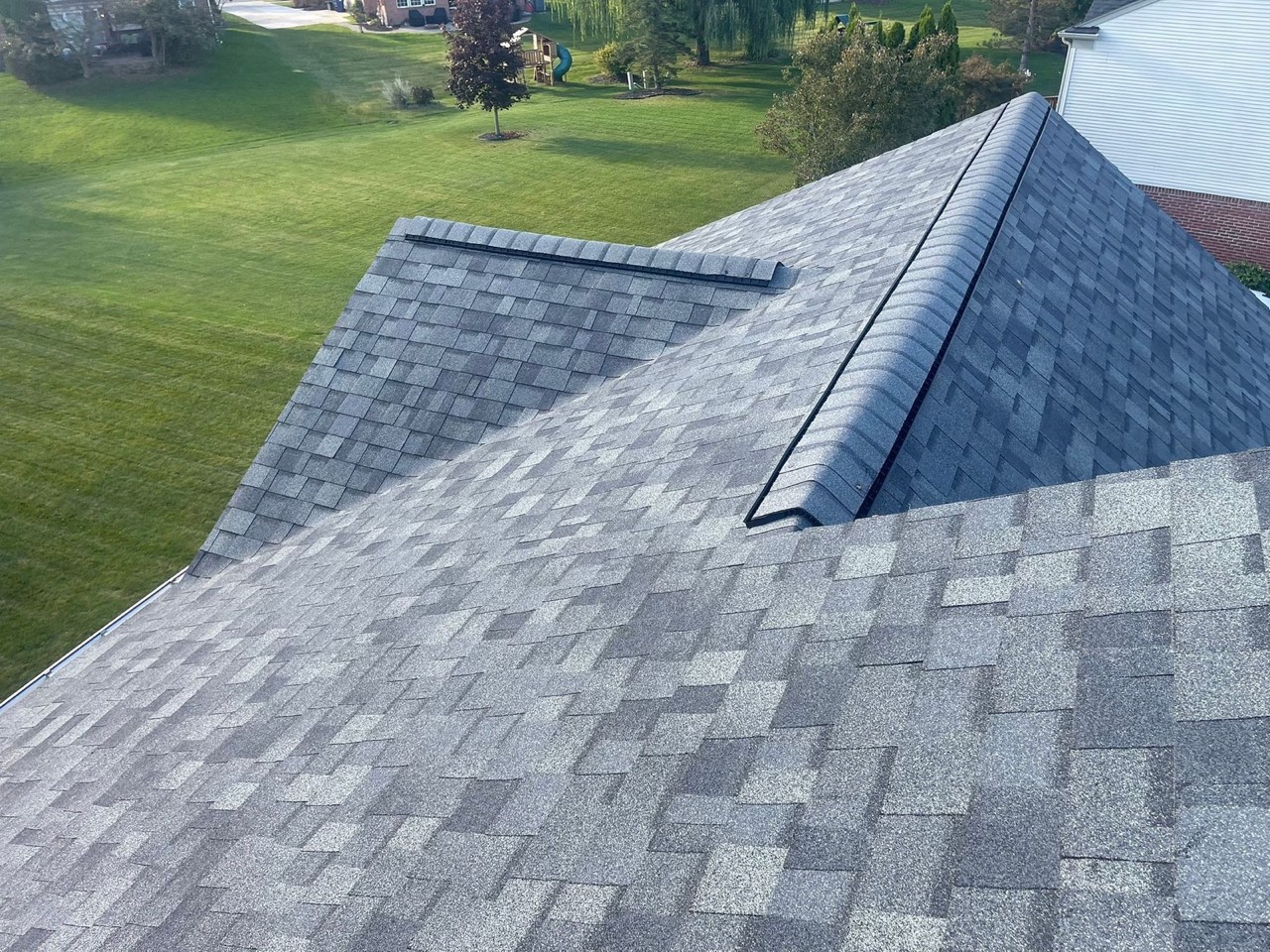
A roof replacement is the easiest time to fix attic airflow: with the old shingles off, ridge exhaust can be cut in and intake corrected, then the new shingles go on over a properly vented deck. It also matters for your warranty. Owens Corning's System Protection warranty requires the roof to be installed over a ventilated deck, and it excludes damage caused by inadequate ventilation.
Insulation can be added in the same project, priced as its own line, so the new roof isn't sitting on top of a hot, damp attic. See our roof replacement process, or check how much life your roof has left.
See My Roof Price in 60 SecondsSigns your attic needs insulation or ventilation
- Ice dams or heavy icicles along the eaves, especially on the same part of the roof every winter.
- Snow melting off your roof faster than your neighbors' roofs, or in patches.
- Frost, damp spots or dark staining on the underside of the roof deck in winter.
- You can see the tops of the attic floor joists: the insulation is no deeper than they are.
- Insulation that is thin, uneven, packed down, or pushed into the soffits so they can't breathe.
- Upstairs rooms that are cold in winter and hot in summer.
- Nail tips poking through the deck that are rusty or frosted.
- A musty smell in the attic.
If a ceiling is already leaking during a thaw, that's a roof and leak repair call first. For the full story on ice dams, read ice dams in Michigan: why they happen and how to stop them.
How an attic job works
Inspect first, price it line by line, fix the airflow, then insulate.
Attic Inspection
We go into the attic: insulation depth and coverage, soffit intake and roof exhaust, signs of moisture or frost, and the gaps where house air leaks in. You get photos of what we find.
Itemized Quote
A written price with insulation and ventilation work on separate lines, so you can see what each one costs and decide. No pressure, no package deals.
Ventilation First
Intake at the soffits is opened up or added and exhaust near the ridge is balanced with it, so air can move under the roof deck once the new insulation is in.
Blown-In Insulation
Loose-fill insulation is blown across the attic floor to an even depth while soffit vents are kept clear. We walk you through the finished attic before we leave.
Attic insulation & ventilation across Downriver
Based in Wyandotte and working across Downriver. See what we do in your city:
Attic insulation and ventilation, answered straight
It depends on the size of the attic, how much insulation is already there, and whether ventilation needs work too, so we price it after looking at the attic. The inspection is free, and you get an itemized number before any work starts.
Usually, yes. Insulation slows heat moving into the attic; ventilation carries away the heat and moisture that still get there. Adding insulation without enough airflow (or burying the soffit vents) can trap moisture against the roof deck. The two work as a pair.
It attacks the cause. Ice dams need a warm roof deck above a cold edge, and a well-insulated, well-ventilated attic keeps the deck close to outdoor temperature. The other half of the fix is ice & water barrier at the eaves, which goes on when the roof is replaced. Heavy snow years can still produce some ice; the goal is to stop it from becoming a leak.
With the roof, if the roof is due in the next few years. Ridge exhaust is cut and intake is corrected while the roof is open, and Owens Corning requires a ventilated deck for its system warranty on a new roof. Insulation can go in the same project. If the roof has plenty of life left, insulation and most vent work can still be done from the attic on its own.
ENERGY STAR's guidance for southeast Michigan's climate zone is about R-60 in an attic with no insulation, or adding about R-49 where there are 3 to 4 inches already. That's guidance, not a promise for every house: low-slope eaves, story-and-a-half attics and knee walls limit what fits, and we'll tell you what your attic can realistically take.
This service is blown-in (loose-fill) attic insulation and ventilation. If your attic really needs something else, we'll tell you.
Spreading the cost of a roof and attic project? See financing through Acorn Finance.
Ice dams last winter? Fix the attic before this one.
Book a free attic inspection. We'll show you what's up there, with photos, and give you an itemized price for the insulation and ventilation it needs.