A few inches of rain can put hundreds of gallons of water on a typical home’s roof. If that water is not collected and directed away from the house, it can soak the fascia, overflow beside the foundation, erode landscaping, and contribute to basement moisture. The best roof drainage upgrades solve the whole water path, not just the visible gutter problem.
For metro Detroit homeowners, that matters even more. Heavy spring rain, autumn leaf drop, freeze-thaw cycles, and snowmelt all test a roof’s drainage system differently. A clean-looking gutter is not necessarily a working system. The right upgrade depends on your roof size, roof shape, drainage layout, lot grading, and the condition of the existing gutters and roof edges.
Start With the Full Water Path
Roof drainage begins at the shingles and ends well away from the foundation. Water should flow off the roof, into properly sized gutters, through downspouts, and onto a surface or drain route that carries it away without pooling.
When one part of that chain fails, homeowners often address the symptom instead of the cause. For example, adding gutter guards will not fix gutters that are undersized or pitched incorrectly. Extending a downspout will not solve water spilling behind the gutter because of damaged fascia or missing drip edge.
A practical inspection should look at the roof edge, gutters, downspouts, discharge locations, and surrounding grade. This creates a documented scope of work and prevents spending money on an upgrade that does not address the actual source of the water issue.
Best Roof Drainage Upgrades That Make a Difference
Replace undersized gutters with 6-inch seamless gutters
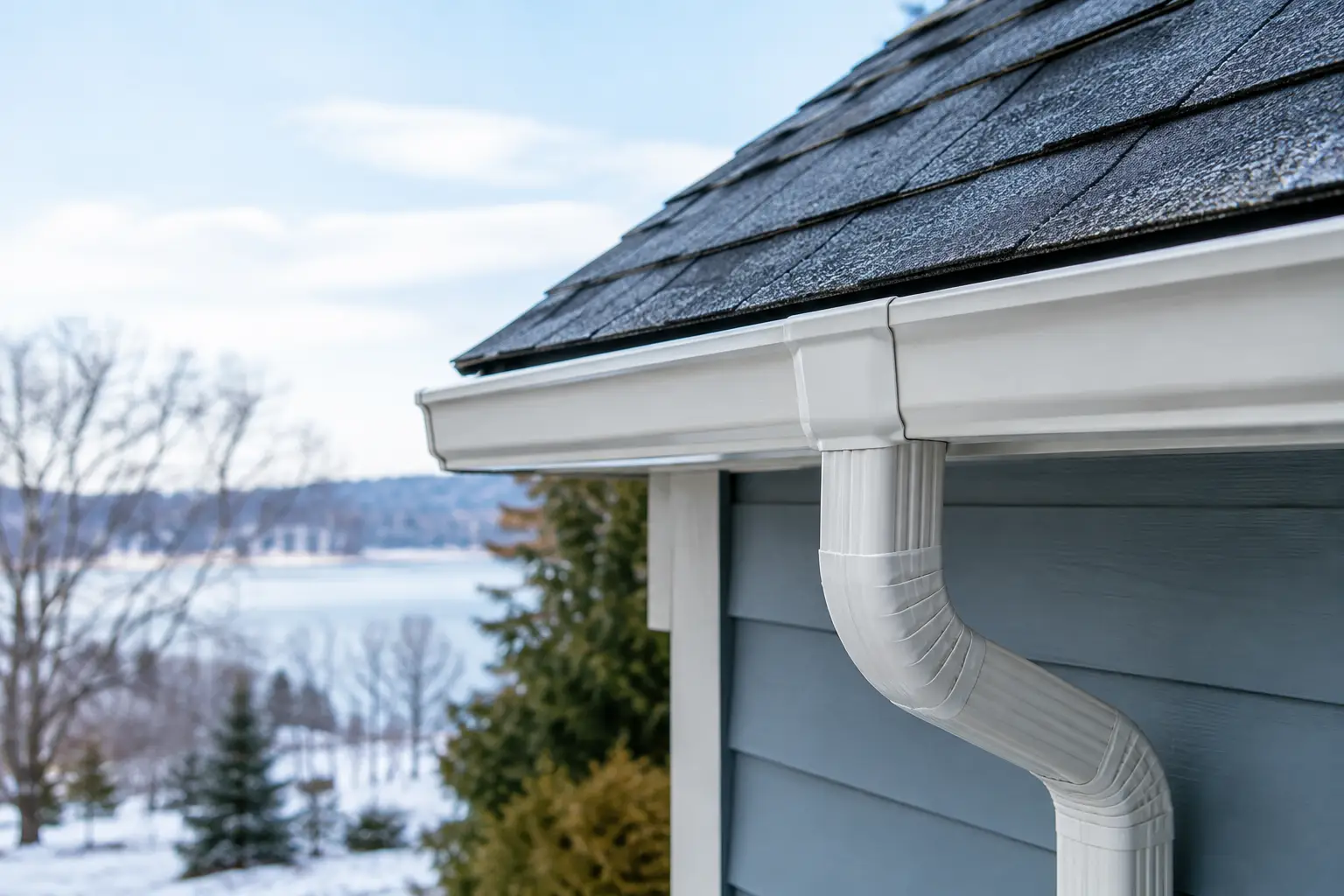
For many homes, upgrading from standard 5-inch gutters to 6-inch seamless aluminum gutters provides the most meaningful improvement. Larger gutters handle more water volume and are especially useful on steep roof planes, long gutter runs, and areas where multiple roof sections drain into one valley.
Seamless gutters are formed on-site to match the home. Fewer joints mean fewer common leak points, while a custom fit helps the system follow the roofline cleanly. Aluminum is a sensible choice for Michigan homes because it resists rust and performs well through changing weather conditions.
That said, bigger is not always automatically better. A small ranch home with simple roof lines may perform well with properly installed 5-inch gutters. The deciding factor is water volume, not the idea that every home needs the largest available gutter.
Add downspouts where the roof is collecting too much water
A gutter can only drain as quickly as its downspouts allow. Long gutter runs with one downspout are a common reason water overflows during a hard rain. Adding another downspout can reduce the strain on the entire run and improve flow without replacing every component.
Placement matters. Downspouts should be positioned to move water toward areas where it can safely discharge, not toward a walkway, driveway, neighbor’s property, or low point near the home. On some properties, a rear downspout route is easy to manage. On others, side-yard space and grading make the layout more complicated.
A qualified installer should also securely fasten downspouts and account for movement from wind, ice, and seasonal expansion. Loose downspouts and weak straps can turn a good drainage design into a recurring maintenance problem.
Extend downspout discharge away from the foundation
Water should generally be released several feet away from the foundation, with enough slope for it to continue moving away. Short elbows that dump water directly beside the house are one of the most common and avoidable drainage mistakes.
Above-ground extensions are affordable, accessible, and easy to inspect. They work well when the yard has a clear slope away from the home. Splash blocks can help prevent soil erosion at the outlet, but they are not a substitute for proper extension length or positive grading.
Buried extensions can be a cleaner option when homeowners want to keep paths and landscaping clear. They require more planning, though. A buried line needs the correct pitch, a reliable outlet, and a design that can be maintained if debris accumulates. In cold climates, poorly installed underground drains can freeze, back up, or discharge too close to the foundation without anyone noticing.
Install gutter guards for the right debris conditions
Gutter guards can reduce the frequency of cleaning, particularly around mature trees. They are most helpful when the gutters themselves are correctly sized, securely attached, and pitched toward working downspouts.
Guards are not maintenance-free. Fine debris, roof grit, pine needles, and leaves can still collect on top of some guard styles. Homeowners should expect occasional visual checks, especially after fall leaf drop and major storms. A guard that restricts water entry during heavy rain is not a good upgrade, no matter how well it blocks debris.
The best choice depends on the tree coverage around the property, roof pitch, and gutter profile. Rather than treating guards as a standalone fix, consider them part of a properly designed gutter system.
Correct gutter pitch, fascia damage, and roof-edge details
Gutters need a subtle pitch toward the downspout so water drains instead of standing in the trough. Sagging sections, loose hangers, and poor slope can lead to overflow, leaks at seams, and ice buildup in winter.
The roof edge deserves the same attention. Proper drip edge directs water from the roof into the gutter instead of behind it. If water repeatedly runs behind the gutter, the fascia board can rot and the gutter fasteners may eventually loosen. This issue is often found during roof replacement, when the roof edge is exposed and repairs can be made before new materials are installed.
If a roof is nearing the end of its service life, it is usually smarter to coordinate drainage work with the roof project. That approach can produce a cleaner installation, protect newly replaced fascia, and make sure the new gutter system fits the finished roofline correctly.
Improve grading where water still pools near the house
Even a well-installed gutter system cannot overcome negative grading. If the soil slopes toward the foundation, water discharged from the downspouts may simply return to the house.
Small grading corrections can make a major difference. Soil should slope away from the foundation, and settled areas near the home may need to be rebuilt. Landscaping beds also need attention: thick mulch piled against siding or foundation walls can trap moisture and hide drainage problems.
For persistent pooling, larger site drainage work may be necessary. That can include swales, catch basins, or professionally designed drain routes. These solutions are more involved than a gutter replacement, but they may be the right answer for homes with low lots or recurring basement water concerns.
What to Prioritize First
If your gutters overflow only during intense storms, start by evaluating gutter capacity, downspout quantity, and slope. If water appears behind the gutters or stains the soffit, inspect the roof-edge details, fascia, and gutter attachment. If gutters drain normally but the ground stays saturated near the house, focus on extensions and grading.
Homeowners should also pay attention to patterns. Water marks on brick, peeling paint near the eaves, soil trenches beneath downspouts, foundation dampness, and icicles along a gutter run all provide useful clues. One storm can be misleading. A repeated pattern points to a system issue that needs correction.
Plan Drainage Upgrades With Clear Documentation
Drainage work should not feel like guesswork. Before approving a project, ask for an itemized scope that identifies gutter size, material, color, downspout locations, discharge plan, and any fascia or roof-edge repairs. If guards or underground extensions are included, the estimate should explain exactly what is being installed and what maintenance is still expected.
For homeowners replacing an aging roof and gutters at the same time, Guthix Roofing can help make the scope clear before work begins. Licensed and insured installation, code-conscious workmanship, and written warranty details give you a better basis for comparing options than a vague quote with one bottom-line number.
The best drainage upgrade is the one that matches how water actually moves across your roof and property. A careful inspection, a clear plan, and materials sized for the job will protect more than your gutters - they help protect the structure beneath them.
Need this done on your Downriver home?
Guthix Roofing is based in Wyandotte and serves Downriver and Wayne County. See roof replacement from a licensed local roofer, or get an instant satellite-measured price in about a minute — just your name and mobile, no phone call.