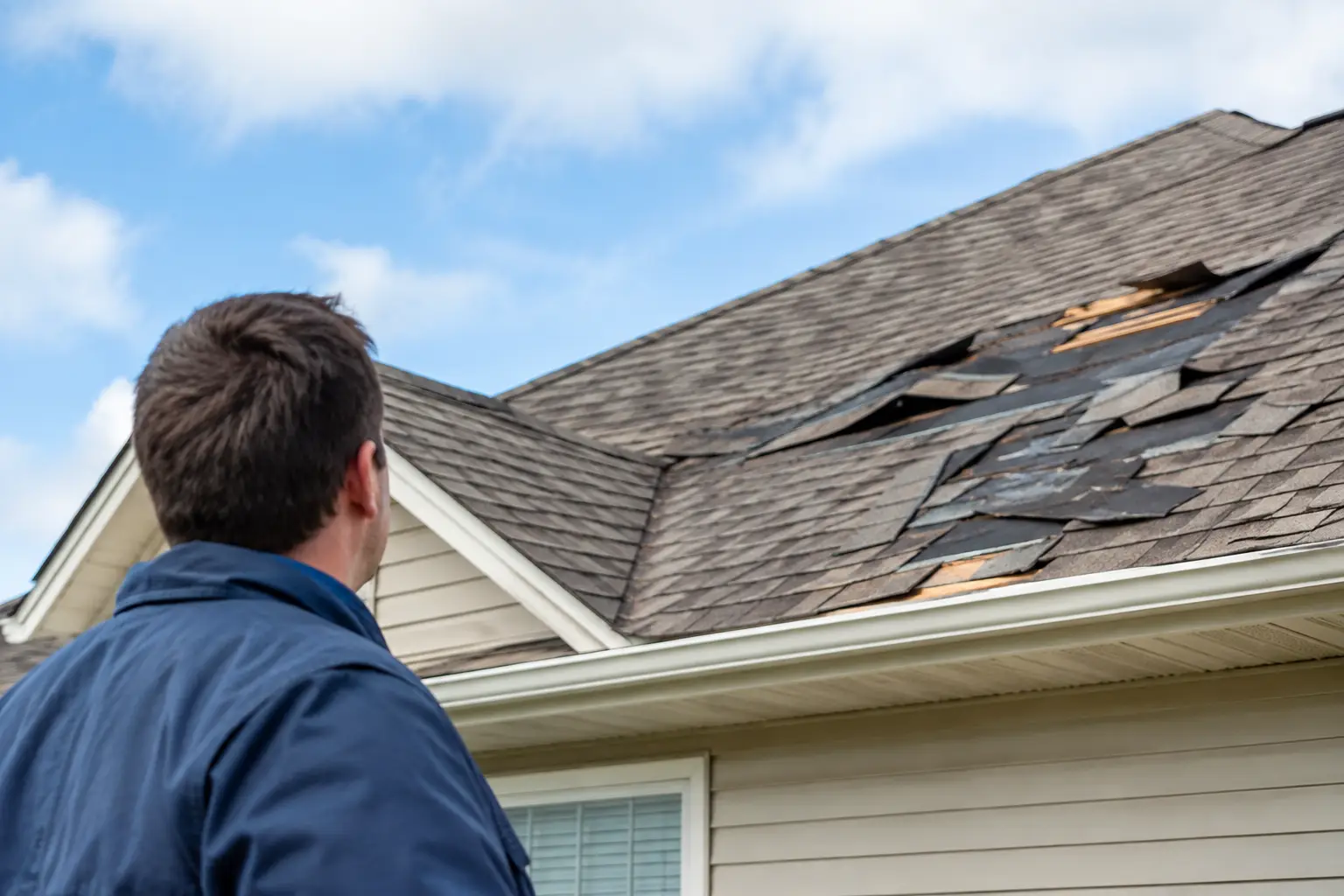
A hard windstorm can damage a roof without leaving a dramatic pile of shingles in the yard. One lifted shingle tab, a broken seal strip, or exposed nail can create an opening that lets wind-driven rain reach the roof deck. This wind damaged roof example shows why a quick, documented inspection is often the difference between a contained repair and an expensive interior water problem.
A Wind Damaged Roof Example From a Typical Michigan Storm
Picture a single-family home with a 12-year-old architectural asphalt shingle roof. After a night of strong gusts, the homeowner notices a few dark pieces of shingle granules near a downspout and one shingle lying in the lawn. From the driveway, the roof still appears mostly intact.
A closer inspection reveals the real issue. Several shingles along the rear slope have lifted at their lower edges. Two have creased near the nail line, meaning they may lie back down but will not reliably reseal. One shingle is missing entirely near a roof-to-wall transition. The underlayment below it is exposed, and a small section of flashing has pulled away from the wall.
That is a common wind damage pattern. The visible missing shingle is easy to identify, but the lifted and creased shingles are just as significant. Once a shingle has been bent sharply by wind, its seal can be compromised even if it looks flat after the storm. Future gusts can catch that loose edge again, while rain can work beneath it.
Inside the home, there may be no ceiling stain yet. That does not mean the roof is fine. Wind-driven rain can enter in small amounts, wet insulation, and travel along framing before it becomes visible in a bedroom or hallway. Waiting for a stain is not a sound inspection strategy.
What Wind Damage Usually Looks Like
Wind damage is not always obvious from ground level. It can show up as missing shingles, lifted tabs, torn edges, displaced ridge caps, or exposed roofing nails. On older roofs, wind may also remove granules and leave bare, darker areas that age faster under sun and moisture.
The location matters. Roof edges, ridges, valleys, chimney areas, and sections that face prevailing winds are especially vulnerable. A shingle that is loose near a sidewall or valley can create a more urgent concern than a similar-looking issue in the middle of an open roof field because water has more opportunities to collect and enter at those transitions.
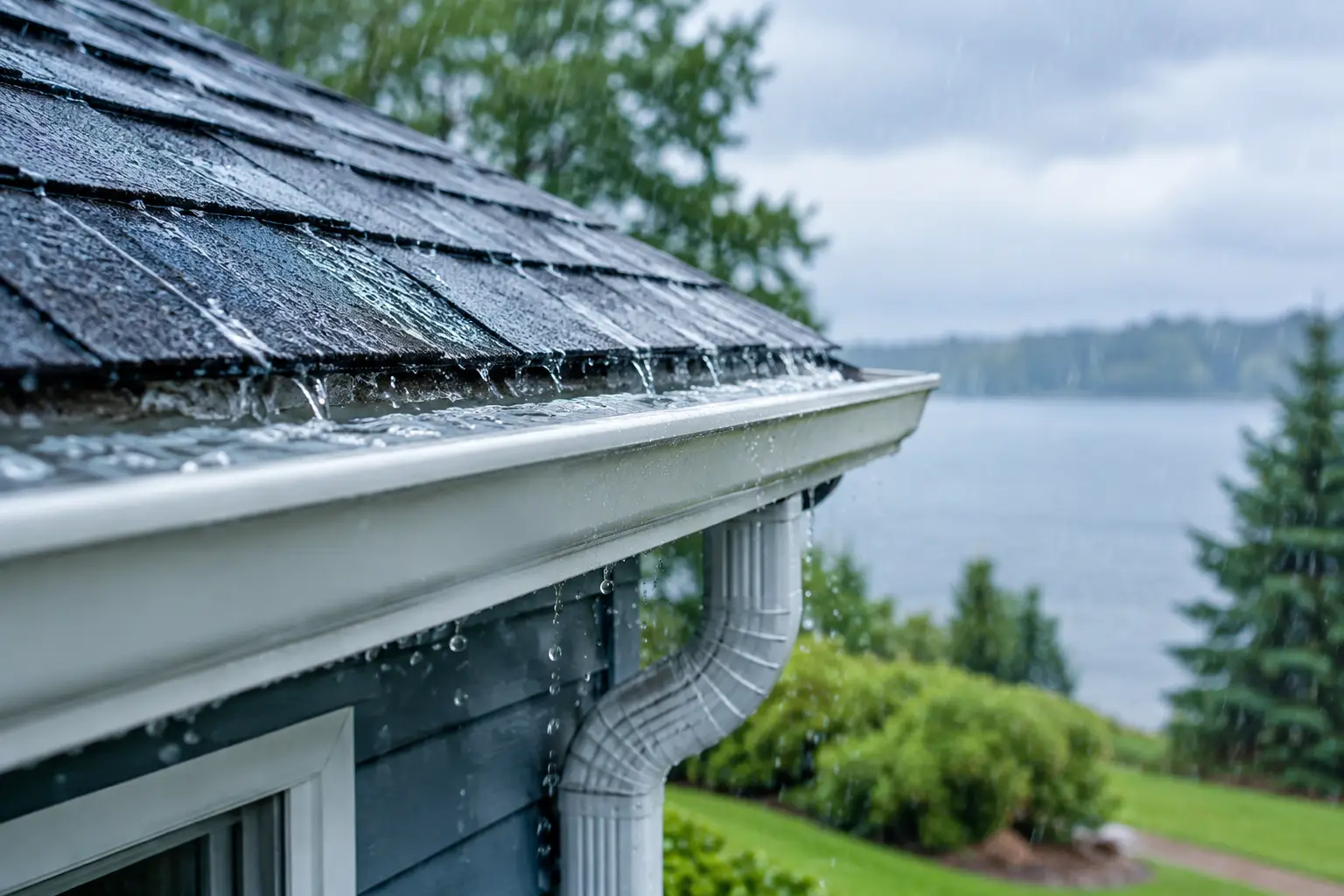
Homeowners should also look around the property after a storm. Shingle pieces, black granules in gutters, bent gutter sections, loose downspouts, and fallen branches can all provide useful context. None of these signs proves the full condition of the roof on its own, but they are good reasons to schedule an inspection.
Do not climb onto the roof to check. Wet shingles, steep slopes, and wind-loosened materials make that a needless safety risk. Clear photos from the ground can help document what you see, but a proper assessment should include a close inspection by a qualified, insured professional.
Why a Single Missing Shingle Can Be a Bigger Issue
Asphalt shingles work as a layered water-shedding system. Water moves down the roof because each shingle overlaps the course below it. When wind breaks that layering, it can expose underlayment, nail penetrations, or the roof deck itself.
In the example above, replacing one missing shingle might sound straightforward. It may be, if the surrounding shingles remain properly sealed, the deck is dry, and the flashing has not been affected. But the trade-off is that a spot repair cannot solve widespread lifting, brittle shingles, or damage across multiple slopes. A repair should address the actual condition, not simply cover the most visible missing piece.
Age also changes the decision. A newer roof with isolated damage may be a strong repair candidate. A roof nearing the end of its useful life, with multiple wind-lifted areas and widespread granule loss, may be better served by replacement. The right answer depends on the roof's condition, the extent of damage, material availability, and whether a lasting repair can be made without creating a patchwork result.
What a Professional Inspection Should Document
A useful roof inspection is more than someone glancing at shingles and saying everything looks okay. Homeowners deserve a clear explanation of what was found, where it was found, and what work is recommended.
The inspection should identify damaged shingles, lifted or creased tabs, flashing concerns, exposed deck or underlayment, ventilation components, ridge caps, and gutter damage. It should also note whether the issue appears isolated or repeated across several areas of the roof.
Photos are valuable because they turn a verbal opinion into something you can review. If replacement is recommended, ask for an itemized scope that explains the materials, tear-off work, underlayment, flashing, ventilation, cleanup, and warranty coverage. If repair is recommended, the scope should state what will be replaced or resealed and what limitations may remain because of the roof's age or matching challenges.
This is where transparency matters. A homeowner should not have to guess whether rotten decking, permit requirements, disposal, or flashing work is included. Clear line items reduce surprises before work starts.
What to Do in the First 48 Hours
Start by protecting people and documenting the property. Move vehicles away from downed limbs, avoid standing beneath loose gutters or soffit materials, and take ground-level photos of visible damage. If water is entering the home, place containers below the drip, move furniture and electronics away from the area, and document the interior condition as well.
Next, arrange a roof inspection promptly. A temporary tarp may be appropriate when there is exposed decking, active leakage, or a missing section of roofing. It is not a permanent repair, but it can limit additional water intrusion while the roof is evaluated.
If you plan to contact your insurance carrier, review your policy and report the loss according to its requirements. Keep inspection notes, photos, storm dates, and receipts for any emergency protective work. A contractor can explain the observed roof condition and provide a detailed estimate, but coverage decisions belong to the insurer.
Avoid signing a broad contract at the door immediately after a storm. Storm-chasing sales tactics often rely on urgency and vague promises. A legitimate contractor should be willing to explain the scope, show proof of licensing and insurance, and provide written pricing without pressure.
Repair or Replacement: How to Make the Call
The central question is not whether the roof has any damage. It is whether the damage can be corrected in a way that restores dependable weather protection.
Repair is often appropriate when damage is limited to a small area, surrounding shingles are still flexible and well-adhered, and replacement materials can be integrated correctly. It can be a practical way to preserve a roof that otherwise has years of useful service remaining.
Replacement becomes more reasonable when wind damage is widespread, shingles are brittle or heavily worn, leaks have affected the deck, or multiple roof components are failing together. For metro Detroit homes, a replacement system should be built for repeated freeze-thaw cycles, heavy rain, snow, and high winds, not just for a clean appearance on installation day.
Material selection matters here. Premium architectural shingles, properly installed underlayment, correctly integrated flashing, and balanced ventilation work together. A new shingle alone cannot compensate for poor flashing details or an installation that ignores local code requirements.
Get a Clear Scope Before the Weather Changes Again
Wind damage does not always announce itself with a major leak. Often, it starts as a lifted edge or missing tab that becomes more vulnerable with every storm. The practical response is simple: get the roof inspected, understand the documented scope, and choose the repair or replacement path that gives your home reliable protection.
Guthix Roofing provides homeowners with clear, itemized recommendations, licensed and insured installation, and written warranty information so the next step does not have to feel uncertain. A straightforward inspection now can help you address the real issue before water finds its way inside.
Need this done on your Downriver home?
Guthix Roofing is based in Wyandotte and serves Downriver and Wayne County. See storm, wind & hail damage repair from a licensed local roofer, or get an instant satellite-measured price in about a minute — just your name and mobile, no phone call.