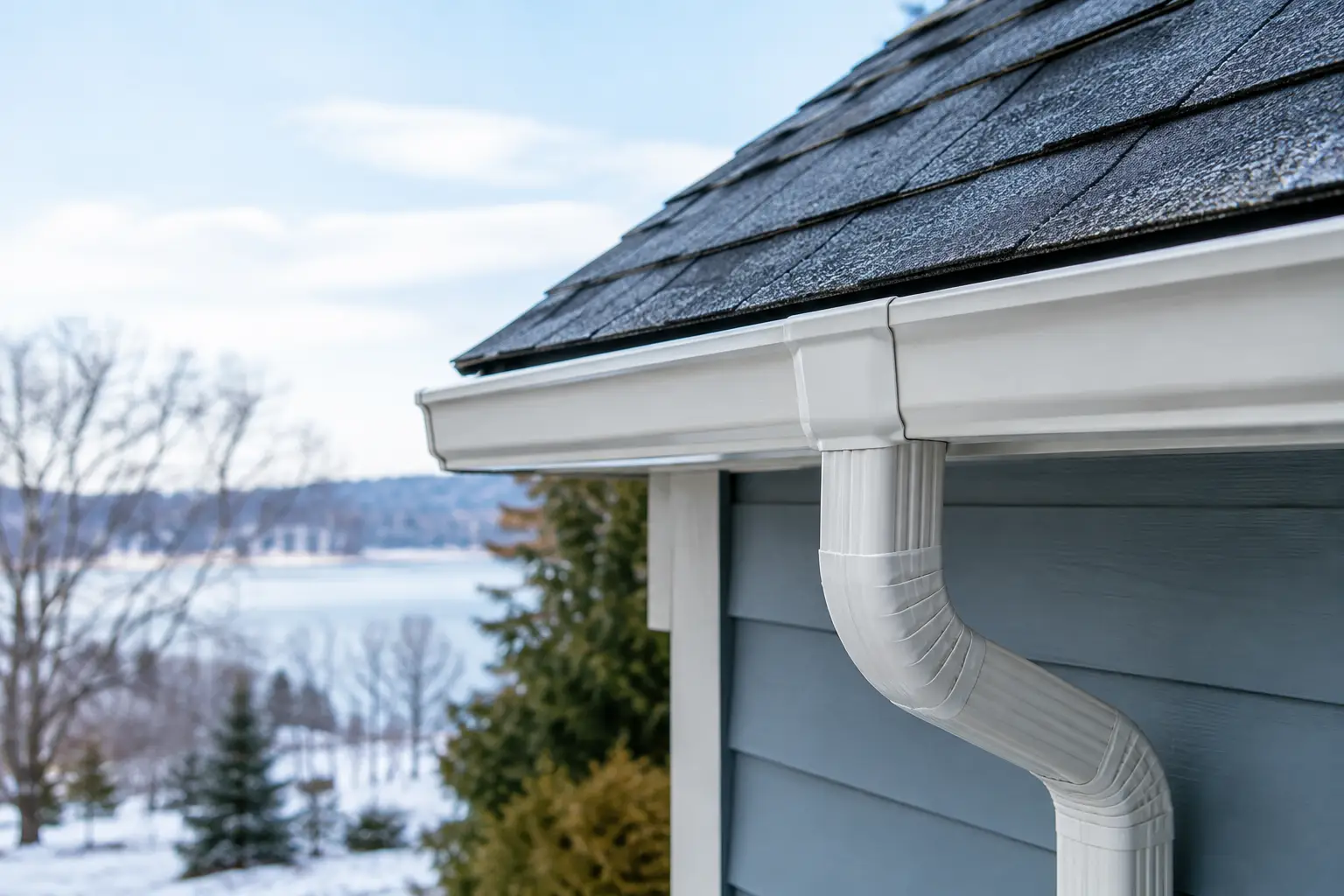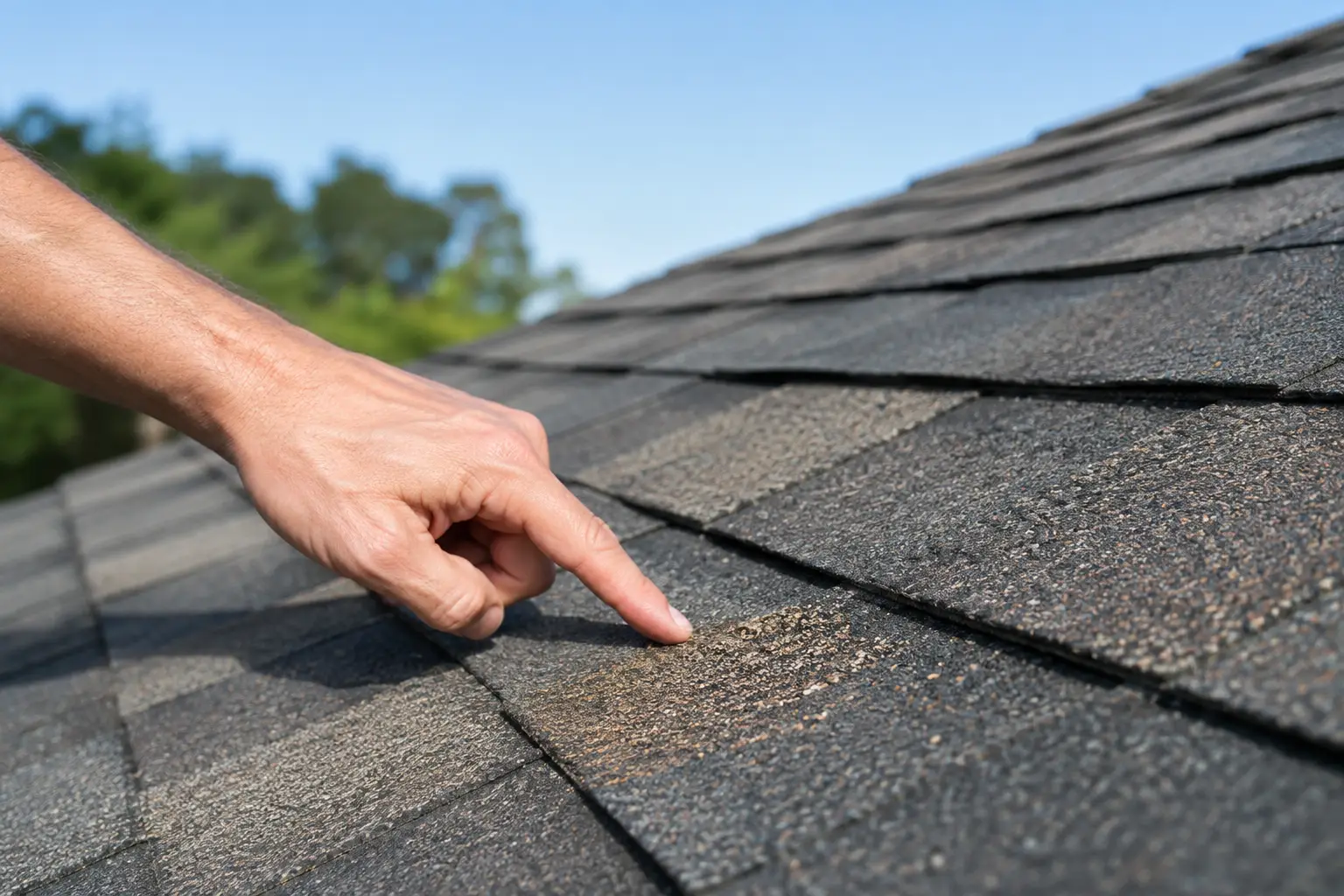
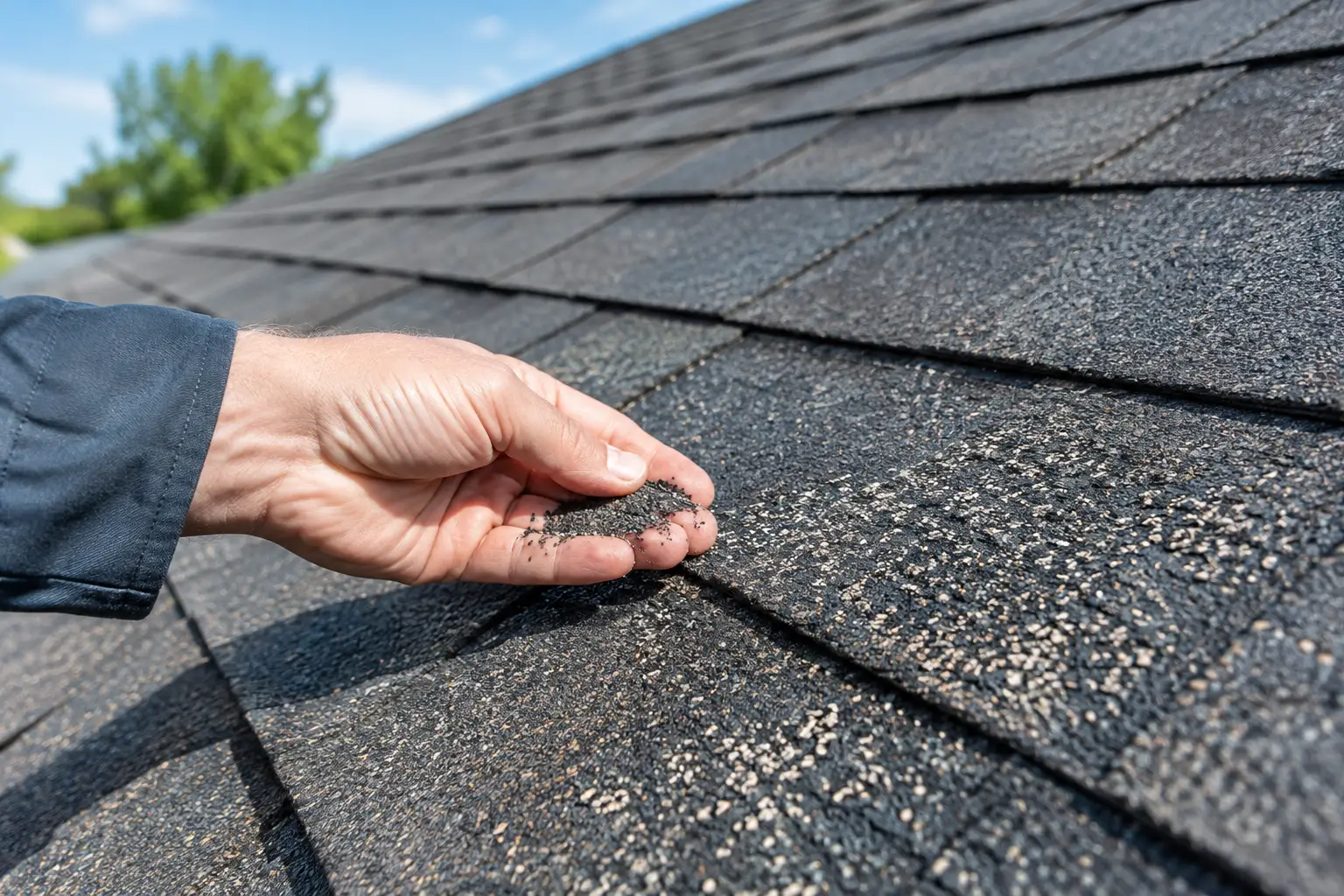
A handful of gritty particles in a gutter can be completely normal. A gutter full of shingle granules, bare-looking roof patches, or dark material washing out after every storm is different. Knowing what causes shingle granule loss helps you separate a routine roofing observation from an issue that deserves a documented inspection.
Asphalt shingles are built with a protective layer of mineral granules bonded to their surface. Those granules are not decorative. They protect the asphalt from ultraviolet exposure, help the shingle shed water, add fire resistance, and contribute to the roof's color. When that layer begins to disappear in meaningful amounts, the shingles can age faster and become more vulnerable to Michigan's changing weather.
Why Asphalt Shingles Have Granules
An architectural asphalt shingle is a layered product. Beneath the visible surface is an asphalt coating and fiberglass reinforcement. The ceramic-coated mineral granules on top shield the asphalt from sunlight and physical wear.
Some granule shedding is expected throughout a roof's life. Manufacturers apply more granules than the finished shingle needs, so a small amount may loosen during handling, installation, and the first seasons of weather exposure. That is why a new roof can leave a light dusting of granules in the gutters without indicating a defect.
The key is pattern and volume. A few scattered granules are not the same as repeated buildup at downspout exits or shingles that look smooth, shiny, or unevenly colored. A homeowner should also consider the roof's age, storm history, ventilation, and whether the loss is isolated to one slope or spread across the entire roof.
What Causes Shingle Granule Loss?
Several conditions can loosen granules, and more than one may be present at the same time. An inspection should identify the cause before anyone recommends a repair or replacement.
Normal manufacturing and installation shedding
New shingles can release excess granules after they are installed. Foot traffic during installation, cutting shingles, and ordinary rain runoff can move those loose particles into gutters. This typically declines after the roof has had time to settle through a few weather cycles.
If the roof is new and the shingle surface looks uniform, modest gutter granules alone are usually not a reason to panic. Keep an eye on the amount over time rather than judging the roof from one gutter cleaning.
Age and long-term weather exposure
Every asphalt roof eventually loses granules as the asphalt binder weathers. Sunlight, temperature swings, rain, snow, and wind gradually weaken the bond holding granules in place. In southeast Michigan, a roof can move from summer heat to hard freezes quickly. That expansion and contraction adds stress over years of service.
Age-related loss is often widespread rather than limited to one small area. You may see more granules in gutters, fading across broad roof sections, exposed black asphalt, curling edges, or cracked shingles. At that stage, replacing a few shingles may not address the larger condition of the roof system.
Hail and wind damage
Hail can dislodge granules on impact, sometimes leaving concentrated dark spots or bruised areas that are easier to see from the roof than from the ground. The damage is not always dramatic. Even moderate hail may fracture the shingle surface and shorten its usable life.
Strong wind creates a different problem. It can lift shingle tabs or edges, breaking the seal and flexing the surface enough to release granules. Wind damage may appear along ridges, eaves, rake edges, or on the side of the home that takes the strongest weather.
Storm damage should be documented promptly. A qualified inspection can distinguish hail or wind effects from ordinary wear and provide clear photos and a written explanation of what was found. That documentation matters if you decide to speak with your insurance carrier.
Poor attic ventilation and trapped heat
Granule loss can begin from below the roof, not just above it. An attic that traps excessive heat can bake shingles from the underside, accelerating asphalt aging. In winter, poor ventilation can also contribute to uneven roof temperatures and ice dam conditions.
Ventilation is not simply a matter of adding more vents wherever there is room. Intake and exhaust must be balanced, and insulation should not block airflow at the eaves. The right solution depends on the home's layout, attic design, and existing roof system. A roof replacement is often the best time to correct ventilation deficiencies because the full system is accessible.
Mechanical wear and roof traffic
Asphalt shingles are not designed to be walked on regularly. Repeated traffic from maintenance work, holiday-light installation, chimney service, or inexperienced inspections can scrape away granules, especially in hot weather when shingles are softer.
Tree branches can cause similar wear. A branch that rubs the same roof area in the wind may scour the surface over time. Trimming it back protects the shingles and reduces the risk of punctures during storms.
Manufacturing defects or installation problems
Defects are less common than ordinary aging or storm damage, but they can happen. Poor adhesive bonding, unusual blistering, or premature surface wear may warrant a closer look at the shingle product and warranty documentation.
Installation details also matter. Improper nailing, inadequate attic ventilation, incorrect flashing, or failure to follow the manufacturer's system requirements can affect roof performance. This is one reason licensed, insured installation and an itemized scope are worth more than a vague quote. A roof is a system, not just a layer of shingles.
When Granule Loss Becomes a Real Concern
Do not rely on gutter granules alone. Look for supporting signs: dark or shiny bald areas on shingles, uneven roof color, widespread cracking, curled edges, missing tabs, recurring leaks, or granules collecting heavily beneath a downspout.
Location matters too. Granules below a single roof valley may point to concentrated water flow or debris abrasion. Loss on a south- or west-facing slope may reflect prolonged sun exposure. Damage limited to a small area after a storm may be repairable, while widespread loss on an older roof usually calls for a broader replacement conversation.
If you notice active leaking, water stains on ceilings, or loose shingles after severe weather, avoid climbing onto the roof yourself. Photograph what you can safely see from the ground, check the attic for visible moisture if it is safe to do so, and schedule an inspection.
Can You Replace Granules or Repair the Shingle Surface?
Loose granules cannot be glued back onto an aging shingle in a way that restores its original performance or warranty protection. Surface coatings and patch products may conceal an issue temporarily, but they do not rebuild the shingle's factory-applied protective layer.
A targeted repair can make sense when the problem is limited, such as a few storm-damaged shingles or abrasion around a vent. It becomes less practical when granule loss is broad, the shingles are brittle, or other aging signs are present. Matching older shingle color can also be difficult, and a patch that solves one visible problem may not extend the remaining roof's life by much.
A good contractor should explain that trade-off plainly. The lowest immediate cost is not always the lowest cost over the next several years if repairs continue to accumulate or a leak develops around worn materials.
What a Thorough Roof Inspection Should Cover
A useful inspection does more than glance at the gutters. It should assess shingle condition, flashing, penetrations, ridge and edge details, visible ventilation components, signs of water entry, and the condition of gutters and downspouts. The findings should be specific enough for you to understand whether the roof needs monitoring, a focused repair, or replacement.
For a replacement recommendation, ask for a written scope that identifies the shingle system, underlayment, ice and water protection where required, flashing work, ventilation approach, cleanup plan, and warranty coverage. Clear line items reduce surprises and let you compare proposals fairly.
For metro Detroit homeowners, a durable architectural shingle system and code-compliant installation matter because the roof must handle wind, snow, freeze-thaw cycles, and summer heat. Guthix Roofing approaches that decision with documented inspections and straightforward pricing, so the condition of your roof is clear before any work is scheduled.
Granules are a small part of a shingle, but they tell a larger story about how the roof is aging. If the evidence points beyond normal shedding, get a clear inspection now, while you still have time to make a measured decision instead of responding to a preventable leak.
Need this done on your Downriver home?
Guthix Roofing is based in Wyandotte and serves Downriver and Wayne County. See roof replacement from a licensed local roofer, or get an instant satellite-measured price in about a minute — just your name and mobile, no phone call.