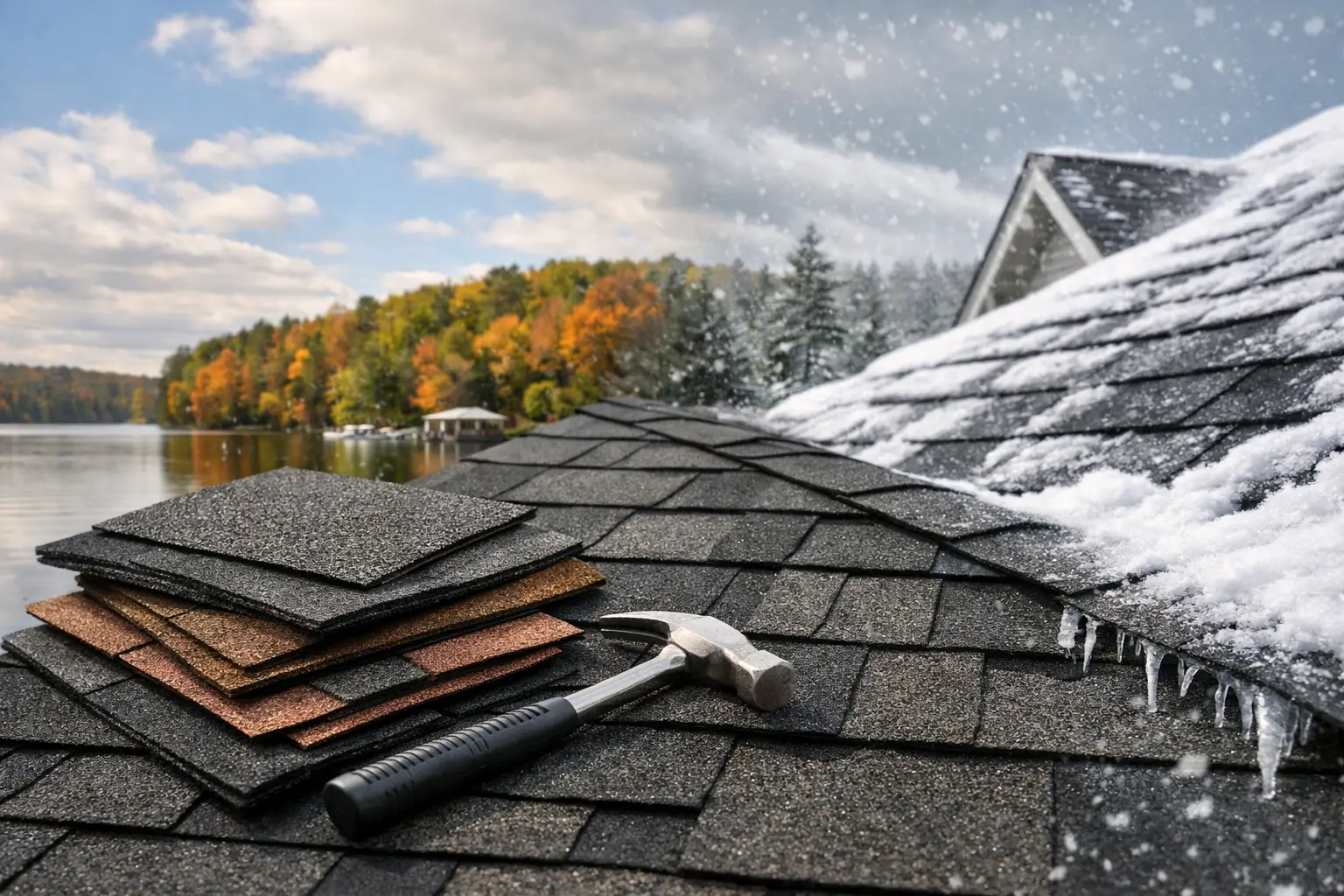
A Michigan roof can look perfectly fine in October and reveal its weak points after one hard winter. Ice dams, wind-driven rain, freeze-thaw cycles, summer heat, and heavy snow all place real demands on a roofing system. The best shingles for Michigan weather are not simply the thickest or most expensive option. They are shingles selected as part of a properly installed system, with the right underlayment, ventilation, flashing, and warranty protection behind them.
For most metro Detroit homeowners, premium architectural asphalt shingles are the practical choice. They offer dependable weather resistance, a dimensional appearance, and a cost that makes sense for a long-term home investment. The details matter, though. A shingle's wind rating, sealant technology, algae resistance, and installation requirements can make a meaningful difference over the life of your roof.
What Michigan Weather Demands From a Roof
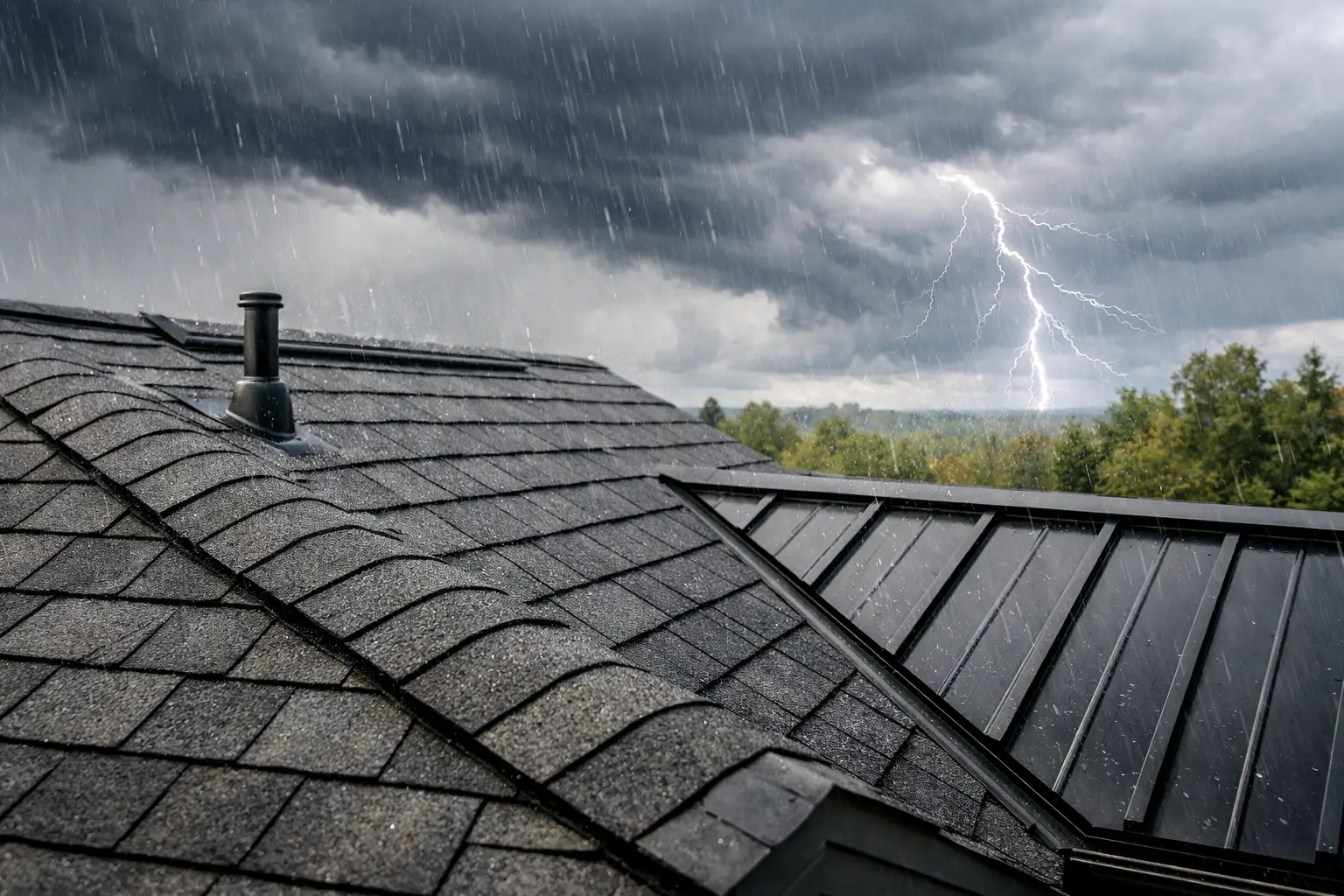
Michigan roofs face more than cold temperatures. Winter snow can sit on a roof for days, while daytime sun melts it and nighttime temperatures refreeze that water near the eaves. This cycle creates the conditions for ice dams, which can force water beneath shingles if the roof system is not properly protected.
Spring and summer bring a different set of concerns: thunderstorm winds, wind-driven rain, hail, humidity, and occasional extreme heat. A roof must shed water quickly, resist wind uplift, and tolerate repeated expansion and contraction without losing its seal.
That is why the right question is not, “Which shingle has the longest advertised warranty?” It is, “Which complete roof system is designed and installed to handle the conditions on my home?” Roof pitch, attic ventilation, exposure to prevailing winds, mature tree coverage, and the condition of existing decking all affect the answer.
Best Shingles for Michigan Weather: Architectural Asphalt
Architectural asphalt shingles are generally the best fit for Michigan homes because they balance performance, appearance, and value. Unlike older three-tab shingles, architectural shingles have a laminated construction that creates more depth and typically provides stronger wind performance.
For a typical residential roof in southeast Michigan, a premium architectural shingle such as Owens Corning Duration® is a strong option. Its reinforced nailing zone is designed to help installers place fasteners accurately and improve resistance to wind uplift. That detail is useful in an area where fast-moving storms can test roof edges, ridges, and exposed slopes.
Architectural shingles also provide a more substantial look than basic shingles, which matters when a roof replacement is part of protecting curb appeal and property value. They are available in a wide range of colors, allowing homeowners to coordinate with brick, siding, gutters, and trim without moving into the significantly higher cost of metal, slate, or cedar.
Why basic three-tab shingles are usually a compromise
Three-tab shingles can be less expensive up front, but the savings often come with trade-offs in thickness, appearance, and wind resistance. For a detached garage, shed, or a very tight budget, they may still have a place. For a primary residence expected to withstand Michigan seasons for years, many homeowners find that architectural shingles offer the better long-term value.
What about metal roofing?
Metal roofs can perform well in snow and high winds, and they can last a long time when correctly installed. They are also a larger upfront investment and require experienced installation around penetrations, valleys, and transitions. Metal can be an excellent fit for certain homes, but it is not automatically the best choice for every property.
A premium architectural asphalt system remains the most practical solution for many homeowners because it delivers strong weather performance at a more accessible price point. It is also easier to repair locally if a future storm damages a small area.
The Shingle Is Only One Part of the System
A quality shingle cannot compensate for weak installation practices. Water intrusion often begins at vulnerable details, not in the middle of the roof field. That makes code-compliant installation and documented scope just as important as the shingle brand.
Ice and water protection at vulnerable areas
Ice and water barrier is a self-adhering membrane installed beneath the shingles in areas most likely to see water backup. In Michigan, this is especially important along eaves, in valleys, around chimneys, and near roof-to-wall transitions. It adds a critical layer of protection when melting snow refreezes or wind pushes water where it does not belong.
The exact placement should follow local code requirements and the roof's design. A low-slope section, complex valley layout, or large overhang may call for extra attention beyond the minimum requirement.
Ventilation helps prevent costly moisture problems
Attic ventilation is not an optional upgrade added for marketing purposes. Balanced intake and exhaust ventilation helps manage attic heat and moisture. During winter, it can reduce the temperature difference that contributes to uneven snow melt. During summer, it helps limit excessive heat buildup beneath the roof deck.
Ventilation will not eliminate every ice dam, especially during severe weather, but poor ventilation can make the underlying conditions worse. Before replacing shingles, a contractor should evaluate the attic and roofline rather than treating the surface layer as the entire problem.
Flashing and drip edge deserve close attention
Flashing directs water away from chimneys, walls, skylights, and other roof interruptions. Drip edge protects the roof deck at the edges and helps guide runoff into the gutters. These pieces are less visible than shingle color, but they are essential to a roof that stays dry.
Ask for an itemized estimate that explains what will be replaced and how these details will be handled. Clear scope is the difference between a price that looks low and a roof system that is actually complete.
Wind Ratings and Algae Resistance Matter Here
Michigan homeowners should look for shingles with strong wind-resistance features, especially on open lots, taller homes, and roofs with steep or exposed slopes. Wind ratings are tied to specific installation methods, including the number and placement of nails. A rating on a product brochure does not help if the installation does not meet those requirements.
Algae resistance is also worth considering. Dark streaks on a roof are often caused by airborne algae, which thrives in humid conditions and on shaded roof sections. Algae-resistant shingles use protective granules to limit staining. They do not eliminate dirt, moss, or debris from overhanging trees, but they can help the roof maintain a cleaner appearance over time.
Color plays a practical role as well. Dark shingles can absorb more heat, while lighter colors may reflect more sunlight. The difference should not be the only deciding factor, but it can matter on a home with limited attic ventilation or long, sunny exposures. Choose a color you will be comfortable seeing every day, then confirm it is available in the performance line that fits your roof.
Compare Warranties With the Fine Print in Mind
A written warranty is valuable, but homeowners should understand what it covers. Manufacturer warranties generally address defects in the roofing materials. Workmanship warranties address installation. These are separate protections, and both matter.
Read the warranty terms for coverage periods, transferability, exclusions, and requirements for registered system components. Storm damage, improper ventilation, inadequate maintenance, and installation issues may not be covered in the same way as a manufacturing defect. A trustworthy contractor will explain the coverage plainly instead of using a long warranty headline to avoid a real conversation.
It also helps to confirm that the crew is licensed and insured and that the proposal identifies the materials, tear-off scope, cleanup expectations, and permit responsibilities where applicable. A roof replacement should not leave you guessing about what was included.
A Practical Choice for a Metro Detroit Roof
For many homes in Wayne, Oakland, Macomb, Washtenaw, and Monroe Counties, a premium architectural asphalt shingle system with ice and water protection, correct ventilation, new flashing details, and professional installation is the sensible answer. It addresses Michigan's most common weather risks without paying for features your home may not need.
The final choice still depends on your roof. A home surrounded by trees may prioritize algae resistance and debris management. A windy, open property may need closer attention to shingle fastening and edge details. A home with recurring ice dams needs an attic and ventilation assessment, not just new shingles.
Before committing, get a clear, itemized estimate that identifies the exact shingle, underlayment, ventilation components, flashing work, and warranty coverage. A roof is too important for vague allowances or hidden costs. When the scope is documented before work begins, you can choose materials with confidence and move forward knowing your home is prepared for the next Michigan winter.
Need this done on your Downriver home?
Guthix Roofing is based in Wyandotte and serves Downriver and Wayne County. See roof replacement from a licensed local roofer, or get an instant satellite-measured price — no name or phone needed to see the number.