A gutter system can look fine from the driveway and still send hundreds of gallons of water to the worst possible place: the soil directly beside your foundation. During a Michigan downpour or spring thaw, that repeated water load can turn a manageable drainage issue into a costly repair. So, can gutters cause foundation damage? Yes - not because gutters are harmful on their own, but because failed, undersized, clogged, or poorly routed gutters allow water to collect where it should never stay.
The good news is that most gutter-related foundation risks are visible early and can be corrected before water has years to work its way into the problem.
How gutters can cause foundation damage
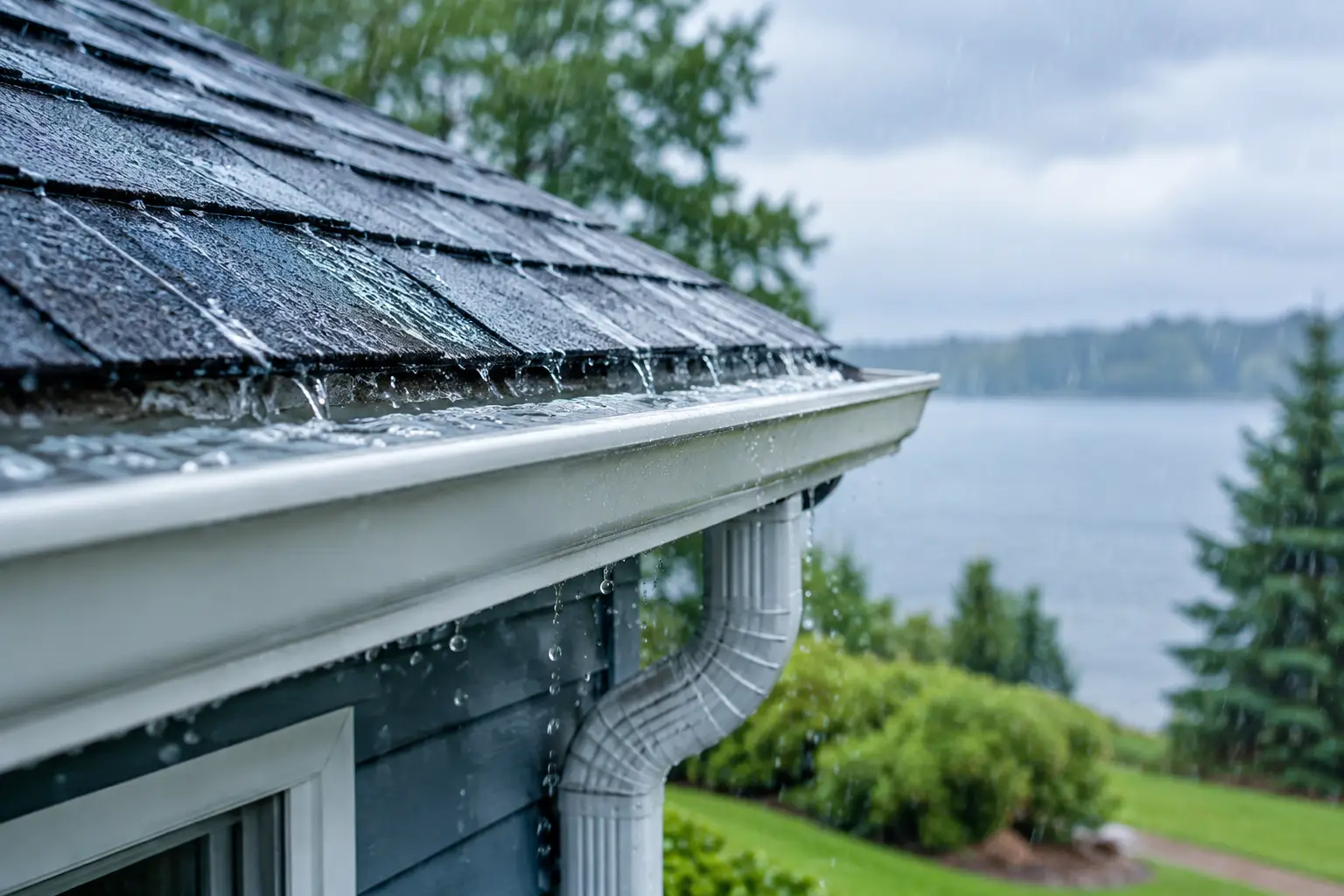
Your roof gathers rain and melting snow across a large surface area. Gutters and downspouts are meant to collect that water and carry it away from the house in a controlled path. When that path is interrupted, water falls over the gutter edge, leaks through seams, or exits a downspout at the base of the wall.
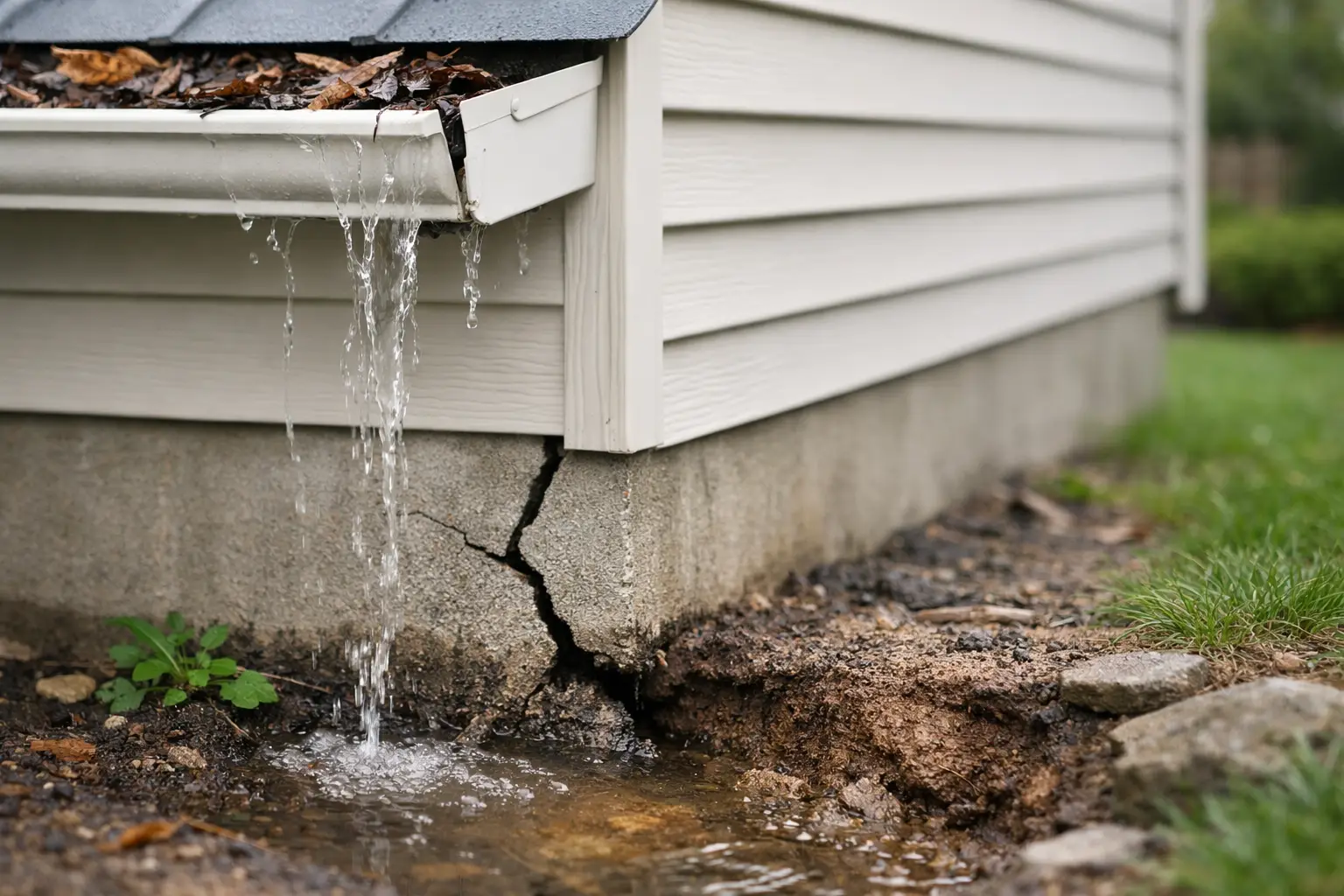
That saturation changes the soil around the foundation. Wet soil can exert added pressure against basement walls, especially when the ground stays saturated after repeated storms. Water may also move through small cracks, gaps around utility penetrations, or joints between the foundation wall and floor. In winter, freeze-thaw cycles can make existing cracks and drainage weaknesses worse.
In southeast Michigan, soil conditions and weather make drainage worth taking seriously. Heavy rain, snowmelt, frozen ground, and clay-heavy soil in many neighborhoods can all slow drainage. Water that has nowhere to go often stays close to the foundation.
A properly installed gutter system does not guarantee a dry basement or solve every grading issue. But it is one of the first and most practical parts of a complete water-management plan.
The gutter problems that put your foundation at risk
Overflowing gutters dump water in one concentrated area
Leaves, shingle grit, seed pods, and other debris can block gutter channels or downspout openings. Once water backs up, it spills over the front or rear edge of the gutter. That may create obvious streaking on siding, but the more serious concern is the volume of water repeatedly landing beside the home.
Overflow is not always caused by debris. A gutter may be too small for a steep or large roof section, pitched incorrectly, or installed with too few downspouts. Water rushing off a roof valley can overwhelm a system that otherwise appears adequate.
Leaking seams and damaged sections create hidden wet spots
Seam leaks, separated end caps, loose fasteners, and holes can release a steady stream of water in the same location every time it rains. Unlike a dramatic overflow, a small leak is easy to ignore. Over months and years, though, it can keep one section of soil consistently wet.
Seamless aluminum gutters reduce the number of joints along a run, which means fewer common leak points than sectional systems. They still need correct installation, secure hangers, and regular inspection around outlets, corners, and end caps.
Short downspouts discharge too close to the house
A working downspout is only half the job. If it ends directly at the foundation, it simply transfers roof water from the gutter to the soil next to the basement wall.
As a general rule, downspouts should direct water several feet away from the house, often at least 4 to 6 feet where the property layout allows. The exact setup depends on grading, sidewalks, driveways, landscaping, and local drainage conditions. The goal is simple: water should continue moving away from the foundation without being directed toward a neighbor's property or a walking surface where it can freeze.
Extensions, splash blocks, and properly designed buried drain lines can all work. Buried lines need special care. If they are crushed, disconnected, frozen, or clogged underground, they can hold water near the foundation instead of carrying it away.
Poor slope makes a good gutter system less effective
Gutters cannot compensate for soil that slopes toward the house. Even with long downspout extensions, water may flow back if the grade is wrong or if mulch, edging, and settled soil have created a low area along the foundation.
A healthy drainage plan uses both components: gutters move roof runoff off the roof, and positive grading guides surface water away after it reaches the ground. If you see water ponding near your home after a normal rain, treat that as a drainage issue worth investigating, not a cosmetic landscaping concern.
Signs gutter runoff may already be affecting your foundation
Foundation damage is not always a dramatic horizontal crack or a flooded basement. Early warning signs are often more subtle. Pay attention to damp or musty basement areas, peeling paint near the lower wall, white mineral deposits on masonry, or water stains that return after storms.
Outside, look for eroded mulch, washed-out soil, standing water, green staining on siding, and trenches formed below a gutter overflow. A downspout that has sunk into soft soil or a splash block that is constantly displaced can also point to concentrated runoff.
Cracks deserve context. Hairline cracks in concrete can be common, particularly as a home settles. What matters is whether a crack is widening, shifting, allowing water through, or appearing alongside bowing walls, sticking doors, uneven floors, or persistent moisture. Those conditions call for an evaluation by the appropriate foundation or structural professional, not guesswork.
What to check before the next heavy rain
You do not need to climb a ladder to spot every problem. Start from the ground during or shortly after a steady rain. Watch where the water leaves the roofline, where it lands, and whether it keeps moving away from the house.
Check that gutters are securely attached and not visibly sagging. Look for water spilling over an edge, dripping from seams, or backing up near a downspout. Confirm that each downspout is attached, clear, and extended far enough to discharge away from the foundation.
Then walk the perimeter. Soil should generally slope away from the home, and there should not be standing water beside the foundation several hours after rainfall, unless the ground is exceptionally saturated. Keep mulch and landscaping from creating a dam that traps water against the wall.
If you have underground downspout drains, test them carefully. Water should enter the system and exit at its intended discharge point. A downspout that fills and overflows at the top may indicate an underground blockage. Avoid assuming the pipe is working just because it is out of sight.
When gutter repair is enough and when replacement makes more sense
A localized issue does not always require a full replacement. Reattaching a loose downspout, correcting a short extension, resealing a small joint, or clearing a blockage may solve the immediate drainage problem.
Replacement becomes more reasonable when gutters have widespread corrosion, repeated seam failures, significant sagging, improper pitch, or insufficient capacity for the roof. If the system was installed without enough downspouts or does not handle heavy runoff from roof valleys, repairing one spot may only move the problem elsewhere.
For homeowners replacing a roof, it is often efficient to evaluate the gutters at the same time. New gutters should fit the roofline, be properly pitched, and have a discharge plan that works with the home's grading. The lowest bid is not always the lower cost if it leaves out downspout extensions, drainage corrections, or the right number of outlets.
A clear estimate should identify the gutter size, material, downspout quantity, outlet locations, removal of old materials, and any extensions or related work included. Those details reduce surprises and make it easier to compare proposals fairly.
Can gutters cause foundation damage even if they look clean?
Yes. Clean gutters can still contribute to water problems when downspouts terminate too close to the house, gutters are pitched incorrectly, the system lacks capacity, or the yard slopes toward the foundation. A clean channel only confirms that debris is not the issue. It does not confirm that water is being carried and discharged correctly.
That is why a drainage check should focus on the full route of the water, from the roof edge to its final exit point. A professional gutter inspection can identify installation and capacity concerns, while a foundation specialist should assess substantial cracking, wall movement, or recurring basement water.
Water management is one of the most preventable parts of home maintenance. Before the next hard rain, take a few minutes to follow where your roof runoff goes. If it ends at your foundation, correcting that path now is usually far less stressful than dealing with the damage later.
Need this done on your Downriver home?
Guthix Roofing is based in Wyandotte and serves Downriver and Wayne County. See seamless gutter replacement from a licensed local roofer, or get an instant satellite-measured price in about a minute — just your name and mobile, no phone call.