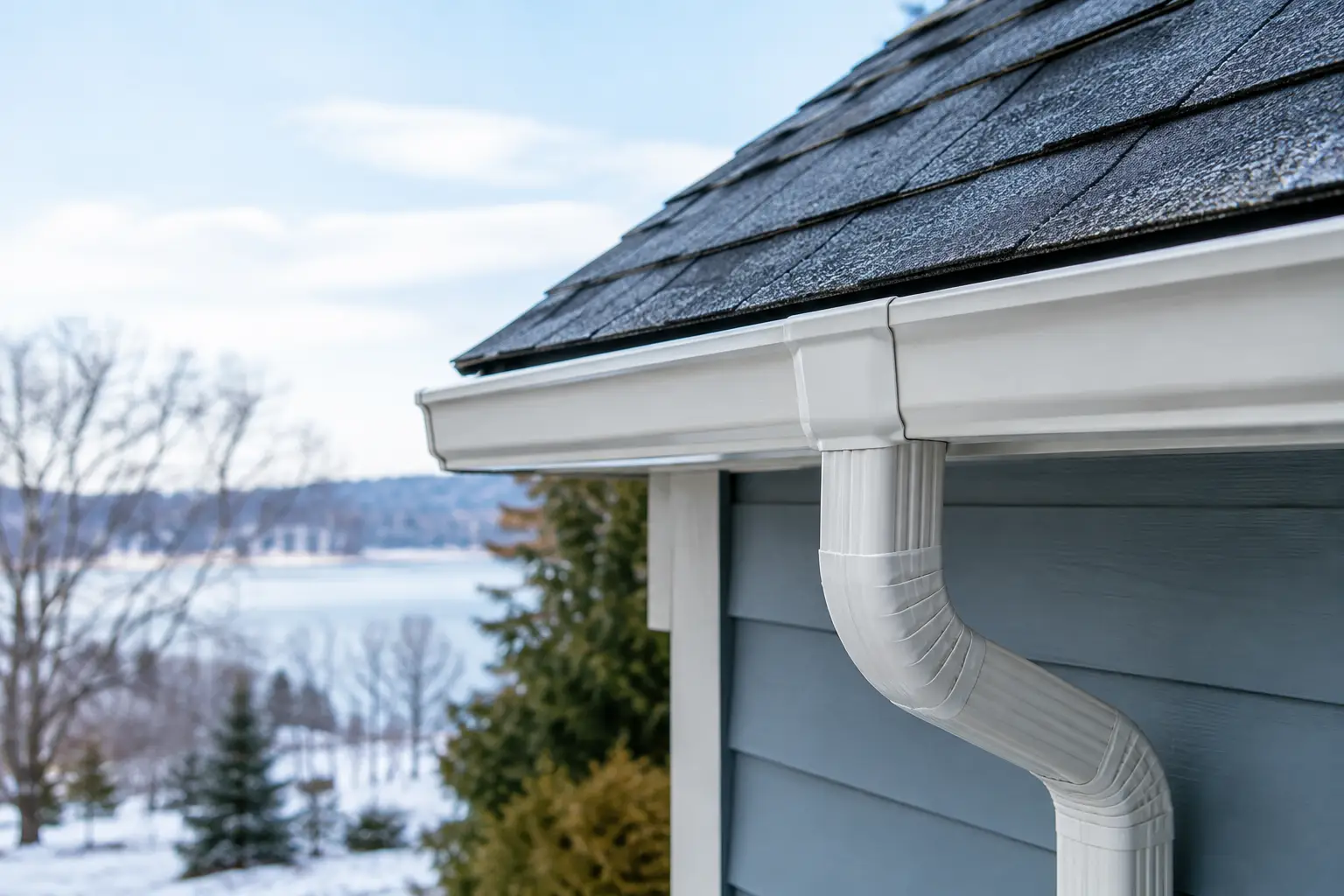
A roof can have excellent shingles and still leak at the places where its surfaces meet. Roof flashing is the thin metal system that manages water at those vulnerable transitions - around chimneys, walls, valleys, skylights, vents, and pipe penetrations. It is not a cosmetic add-on. It is one of the details that determines whether rain and melting snow stay on the outside of your home.
For metro Detroit homeowners, flashing matters even more because a roof must handle wind-driven rain, freeze-thaw cycles, snow buildup, and ice dams. When flashing is installed correctly, water has a controlled path off the roof. When it is missing, corroded, bent, or installed in the wrong sequence, water can work behind shingles and into the roof deck, attic, walls, or ceiling.
What Roof Flashing Does
Shingles are designed to shed water down a sloped roof plane. They are less effective where the roof changes direction or meets a vertical surface. Flashing bridges those gaps and uses overlapping layers to keep water moving outward instead of inward.
A properly built roof system does not rely on caulk alone to stop water. Sealant has a role at certain details, but it eventually ages, shrinks, or cracks. The primary protection comes from correctly lapped metal, underlayment, shingles, and fasteners. Water should always have a path to drain over the material below it.
That sequence is why flashing work deserves attention during a roof replacement. It may be largely hidden when the project is complete, but it is doing critical work every time it rains.
Where Roof Flashing Is Needed
The exact flashing layout depends on the shape of the home, but several areas consistently require careful installation.
Chimneys and Sidewalls
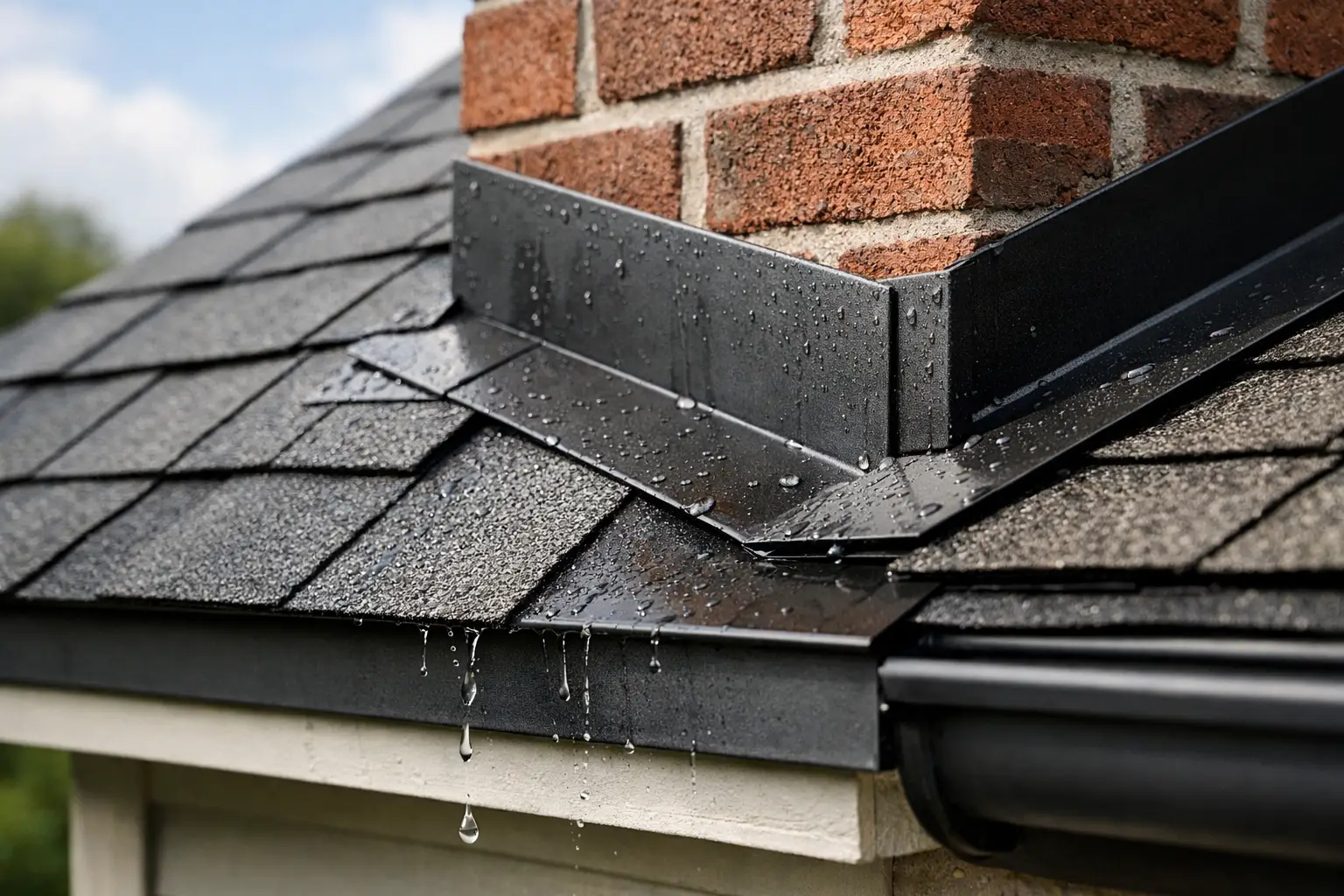
Where a roof meets a chimney or a vertical wall, installers use step flashing. These are individual pieces of metal woven between shingle courses. Each piece directs water onto the shingle below, creating a layered path down the roof.
At a chimney, counterflashing provides another layer of protection. It covers the upper edge of the base flashing where it meets masonry. On some older homes, the counterflashing may be set into mortar joints. Replacing a roof does not automatically mean every masonry-related flashing component needs replacement, but it should be inspected closely. Reusing sound counterflashing can be reasonable. Reusing bent, loose, heavily corroded, or poorly detailed metal is usually a false economy.
Valleys
A valley is where two roof slopes meet and concentrate runoff into one channel. Because so much water moves through this area, the underlayment and flashing approach must suit the roof design and local weather exposure. An open metal valley is visible after installation. A closed valley is covered by shingles, with protective material below.
Neither approach is automatically best in every case. The right choice depends on roof pitch, shingle system requirements, drainage volume, and the existing roof design. What matters is that the valley is straight, fully protected, and installed so water cannot travel under the shingles.
Plumbing Vents, Skylights, and Other Penetrations
Every pipe, vent, skylight, or roof-mounted accessory interrupts the shingle field. These penetrations need purpose-built flashing that fits the item and is integrated into the surrounding shingles.
Plumbing vent boots are a common source of leaks on aging roofs. Their rubber collars can crack after years of sun and temperature changes, even if the shingles still look acceptable from the ground. Skylights need more involved flashing kits and careful integration with underlayment. A leak near a skylight is not always caused by the skylight itself. It can come from failed flashing, surrounding shingles, or an issue higher up the roof that lets water travel before it becomes visible indoors.
Dormers, Kick-Outs, and Roof-to-Wall Transitions
Dormers and walls create transitions that need more than a simple bead of sealant. Step flashing handles the sidewall, while headwall flashing protects the top edge where water can collect.
Kick-out flashing is a small but valuable detail at the bottom of a roof-to-wall intersection. It directs water away from siding and into the gutter. Without it, runoff can repeatedly soak the wall or trim, leading to peeling paint, rot, stains, and hidden moisture damage. This is especially worth checking where a lower roof ends against a wall near a gutter.
Signs Flashing May Need Attention
A roof leak does not always leave a dramatic ceiling stain right away. Water may dampen insulation, discolor sheathing, or travel along framing before it reaches a visible interior surface. If you notice a problem, document when it occurs and what the weather was doing. That information can help identify the source.
Common warning signs include:
- Water stains near a chimney, skylight, exterior wall, or bathroom vent
- Drips or damp attic insulation after wind-driven rain or snowmelt
- Rusted, lifted, cracked, or visibly loose metal around roof transitions
- Cracked vent boot collars or exposed fasteners at penetrations
- Siding or trim damage where a roof edge meets a wall
These signs do not always mean a full replacement is required. A localized flashing repair can make sense when the surrounding roof is relatively new, the roof deck is sound, and the issue is limited to one detail. But if shingles are near the end of their service life or multiple areas are failing, replacing isolated flashing without addressing the aging roof can create repeated repair costs.
Flashing Decisions During a Roof Replacement
A roof replacement is the best time to address flashing because the surrounding shingles and underlayment are already being removed. Homeowners should expect the contractor to inspect the existing metal once it is accessible, not simply cover every detail without evaluation.
Some flashing can be retained if it is in excellent condition and compatible with the new roof system. Other components, such as vent flashings, valley protection, pipe boots, and damaged step flashing, commonly need replacement. The scope should be explained in writing, including what will be replaced, what may be reused, and how any concealed deck or masonry issues will be handled if discovered.
Material choice also matters. Galvanized steel, aluminum, copper, and lead are used in different applications. Aluminum is lightweight and corrosion-resistant in many settings, while galvanized steel is widely used and durable when properly coated. Copper has a long service life and a distinct appearance, but it comes at a higher cost. The best material is not just the most expensive option. It must be compatible with the roof, adjacent materials, and the specific detail being installed.
Michigan winters add another consideration: ice and water protection. This self-adhering membrane is installed beneath shingles in leak-prone areas, commonly along eaves, valleys, and roof transitions. It is not a substitute for flashing, but it provides an important secondary layer when ice backs up at the roof edge or wind pushes water where it does not normally go.
Questions Worth Asking Before Work Begins
You do not need to become a roofing expert to protect your home. You do need a clear scope. Ask whether the estimate identifies flashing and penetration work separately from shingles, whether chimney and wall details will be inspected, and whether any damaged decking will be documented before replacement.
It is also reasonable to ask how the crew will protect landscaping, collect debris, and verify the finished work. A contractor should be comfortable explaining the installation sequence in plain language. Vague answers such as “we take care of it” do not provide the same confidence as a documented, itemized plan.
If a contractor recommends additional flashing work after tear-off, ask to see the condition that prompted the recommendation. Some issues cannot be confirmed until old materials are removed. That is normal. The key is transparent communication before extra work proceeds, not a surprise charge after the fact.
Protect the Details You Cannot See
A new roof should do more than improve curb appeal. It should manage water at every transition, through heavy rain, melting snow, and years of seasonal movement. Flashing is one of the smallest visible parts of that system, yet it can have an outsized effect on whether your home stays dry.
When comparing roof proposals, look beyond the shingle brand and total price. A complete, clearly written scope that addresses flashing, underlayment, ventilation, cleanup, and warranty coverage gives you a more reliable basis for comparison. Guthix Roofing builds that clarity into its itemized approach, so homeowners can make decisions with fewer assumptions and zero hidden costs.
Need this done on your Downriver home?
Guthix Roofing is based in Wyandotte and serves Downriver and Wayne County. See roof leak repair from a licensed local roofer, or get an instant satellite-measured price in about a minute — just your name and mobile, no phone call.