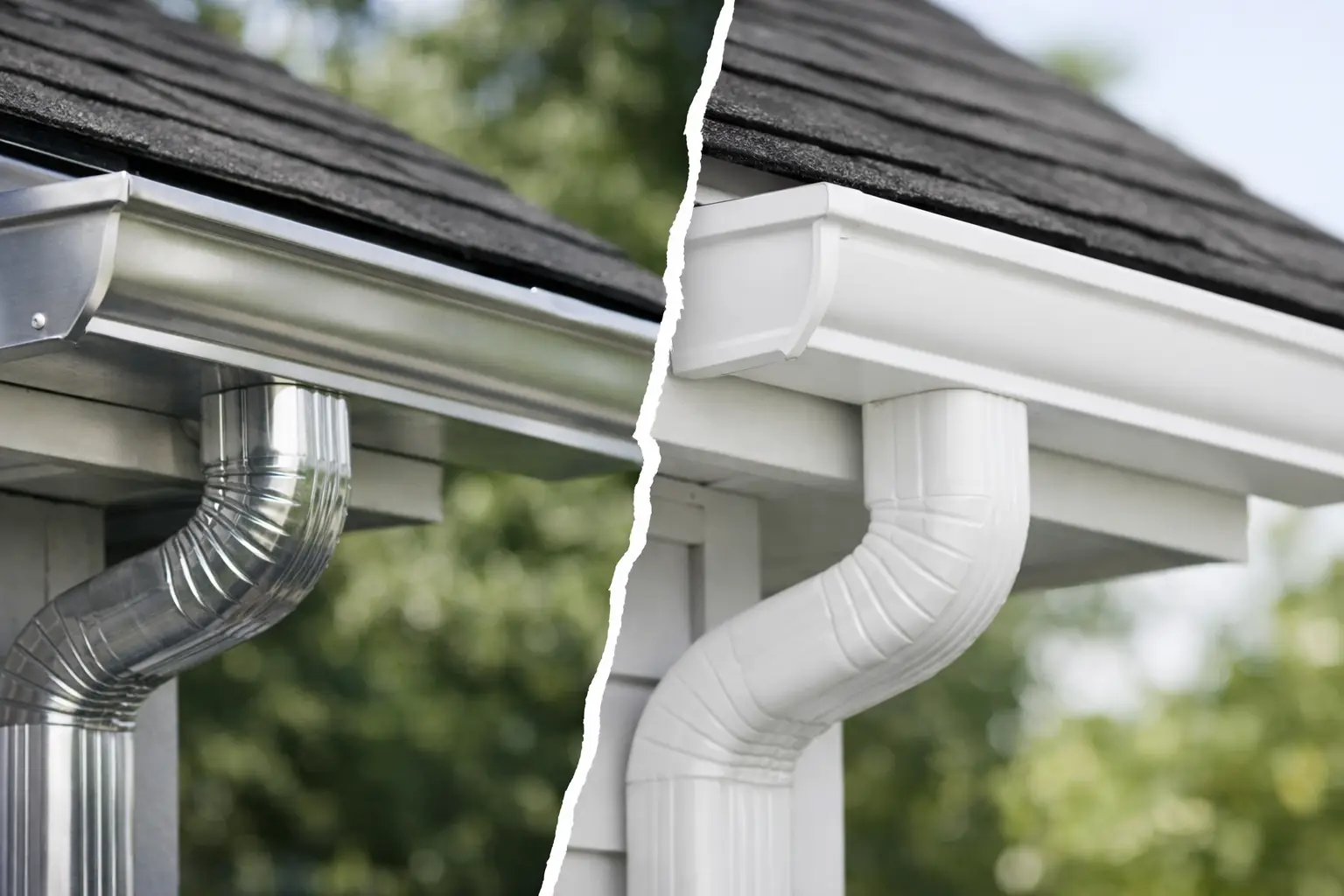
A gutter system can look fine from the driveway while quietly sending water toward the foundation, behind siding, or onto a slippery walkway. For metro Detroit homeowners planning a replacement, aluminum gutters versus vinyl gutters is less about appearance than long-term performance through snow, ice, wind, and repeated freeze-thaw cycles.
Vinyl may look like the lower-cost answer at first. Aluminum usually provides the better value when the goal is a custom-fit system that stays aligned, carries water reliably, and holds up through Michigan weather. The right choice still depends on your budget, roof layout, and how long you expect to own the home.
Aluminum Gutters Versus Vinyl Gutters at a Glance
The central difference is how each material is made and installed. Vinyl gutters are lightweight plastic sections, commonly sold in standard lengths and joined together with connectors. Aluminum gutters are metal and can be installed in pre-cut sections or formed on-site into continuous, seamless lengths for the house.
That difference affects nearly everything that matters after installation. More joints create more potential leak points. A material that expands, contracts, or becomes brittle in cold weather may need more attention over time. A gutter system also has to support the weight of moving water, wet leaves, snow, and ice without pulling away from the fascia.
For a small shed or a temporary budget project, vinyl can be reasonable. For most primary residences, especially homes with long roof runs or mature trees, seamless aluminum is the more dependable option.
Cost: Initial Price Is Only Part of the Decision
Vinyl gutters generally cost less to buy. Their lighter weight and modular design can also make them appealing for do-it-yourself work. If the only question is which material has the lowest upfront material cost, vinyl usually wins.
But gutter replacement is not a purchase homeowners want to repeat because sections sagged, seams leaked, or brackets failed. The installed price of aluminum reflects stronger material, professional fastening, properly pitched runs, downspout placement, and often custom on-site forming. Those details are not extras. They determine whether water reaches the downspout or spills over the edge during a hard rain.
A transparent estimate should separate gutter material, downspouts, removal of old gutters, and any needed fascia or drainage work. That makes it easier to compare proposals fairly. A lower number is not a better value if it leaves out necessary downspouts, uses undersized material, or does not address damaged wood behind the existing system.
Durability in Southeast Michigan Weather
Michigan weather is particularly hard on gutters because conditions can change quickly. A system may handle heavy spring rain one week, wind-blown leaves the next, then ice and snow later in the year.
Why vinyl can struggle in cold temperatures
Vinyl does not rust, which is a legitimate advantage. It also does not need painting. However, cold temperatures can make vinyl less flexible and more prone to cracking if it is struck or stressed. Seasonal temperature swings can also cause the material to expand and contract, which may affect joints and hangers over time.
Vinyl gutters are light, but light weight is not always an advantage. A run carrying trapped water, packed debris, or ice needs firm support. If the slope changes or brackets loosen, water can stand in the gutter instead of draining as designed.
Why aluminum is the common residential standard
Aluminum resists rust and offers a much stronger balance of weight, durability, and corrosion resistance for residential use. It can dent if hit by a ladder or large branch, but quality aluminum gutters installed with the correct hanger spacing are built to handle normal weather exposure well.
Seamless aluminum is especially practical on long rooflines. Because each run is formed to the required length, there are fewer joints along the gutter channel. End caps and corners still require sealed connections, but reducing seams reduces the places where leaks commonly begin.
For homes in Wayne, Oakland, Macomb, Washtenaw, and Monroe Counties, this is one reason professionally installed seamless aluminum is often the sensible long-term choice. It is designed around the actual measurements of the home instead of asking standard sections to fit every roofline.
Installation Quality Matters as Much as Material
A premium gutter material cannot compensate for a poor installation. Gutters need a controlled slope toward the downspouts, secure attachment to solid fascia, and enough downspout capacity for the roof area they serve. If water overflows during normal rainfall, the issue may be layout or sizing, not simply the gutter material.
The installer should also inspect the fascia while old gutters are removed. Rotting or soft wood can prevent hangers from holding properly. Covering that condition with new gutters may make the exterior look better briefly, but it does not solve the underlying problem.
Aluminum systems are commonly attached with hidden hangers and screws that create a cleaner appearance and firm support. Vinyl systems use brackets and connectors that are visible and can become a point of movement over time. Neither system is maintenance-free, but an aluminum installation with fewer seams gives homeowners fewer components to watch.
Appearance and Color Options
Vinyl gutters are usually available in a limited selection of standard colors, often white or brown. Over time, some vinyl can fade, chalk, or show staining. That may not matter on a detached garage, but it can be noticeable on the front elevation of a home with newer siding, trim, or roofing.
Aluminum gutters are available in a broader range of baked-on finishes. This makes it easier to coordinate the gutter system with trim, siding, shutters, and roof color. A clean color match helps gutters do their job without becoming a visual distraction.
For homeowners replacing a roof and gutters together, selecting the gutter color early avoids rushed decisions at the end of the project. The goal is simple: a system that manages water correctly and looks appropriate for the home.
Maintenance: Both Materials Need Attention
No gutter material eliminates the need for maintenance. Leaves, shingle granules, seed pods, and roof debris can block a downspout regardless of whether the channel is vinyl or aluminum. A clogged downspout can force water over the front or back of the gutter, where it may affect landscaping, siding, and foundation drainage.
Vinyl systems deserve regular checks at the connectors, brackets, and any areas where sagging may develop. Aluminum systems should be inspected for loose fasteners, damaged sealant at corners and end caps, and dents that interfere with drainage. Homeowners should also make sure downspout extensions direct water away from the foundation.
Gutter guards can reduce the amount of debris entering a system, but they are not automatically the right answer for every roof. Guard performance depends on the tree coverage, roof pitch, existing gutter condition, and the guard design. A clear inspection and itemized recommendation are more useful than adding a product by default.
When Vinyl Gutters May Make Sense
Vinyl is not always the wrong material. It can be a practical choice for a low-cost outbuilding, a short-term repair, or a homeowner who needs the lowest initial expense and accepts a shorter service life. It is also easy to find at many home improvement stores.
The trade-off is that standard vinyl sections and connectors are more likely to show their age through movement, staining, leaking seams, or cold-weather damage. On a main home, the savings can narrow quickly if repairs or replacement are needed sooner than expected.
When Aluminum Is Worth the Investment
Aluminum is usually worth the investment when you want a replacement system rather than a temporary fix. It is particularly well suited to homes with long gutter runs, complicated rooflines, significant rainfall flow, or a need for durable color coordination.
A seamless aluminum system also gives the installer control over the fit. Gutters can be formed to the home, placed with the appropriate slope, and paired with downspouts sized and located for the roof's drainage needs. That is a more complete approach than treating gutters as a row of parts attached beneath the roof edge.
Guthix Roofing installs seamless aluminum gutter systems formed on-site for a custom fit, with clear scope and pricing before work begins. Homeowners should know what is being replaced, how water will be directed, and what workmanship and material protections apply - no hidden costs and no guesswork.
Before choosing a material, walk around the home after a steady rain if possible. Look for overflowing corners, splash marks on siding, eroded mulch, standing water near the foundation, and downspouts that empty too close to the house. Those observations help turn a gutter replacement from a material decision into a practical plan for protecting the property.
Need this done on your Downriver home?
Guthix Roofing is based in Wyandotte and serves Downriver and Wayne County. See seamless gutter replacement from a licensed local roofer, or get an instant satellite-measured price in about a minute — just your name and mobile, no phone call.