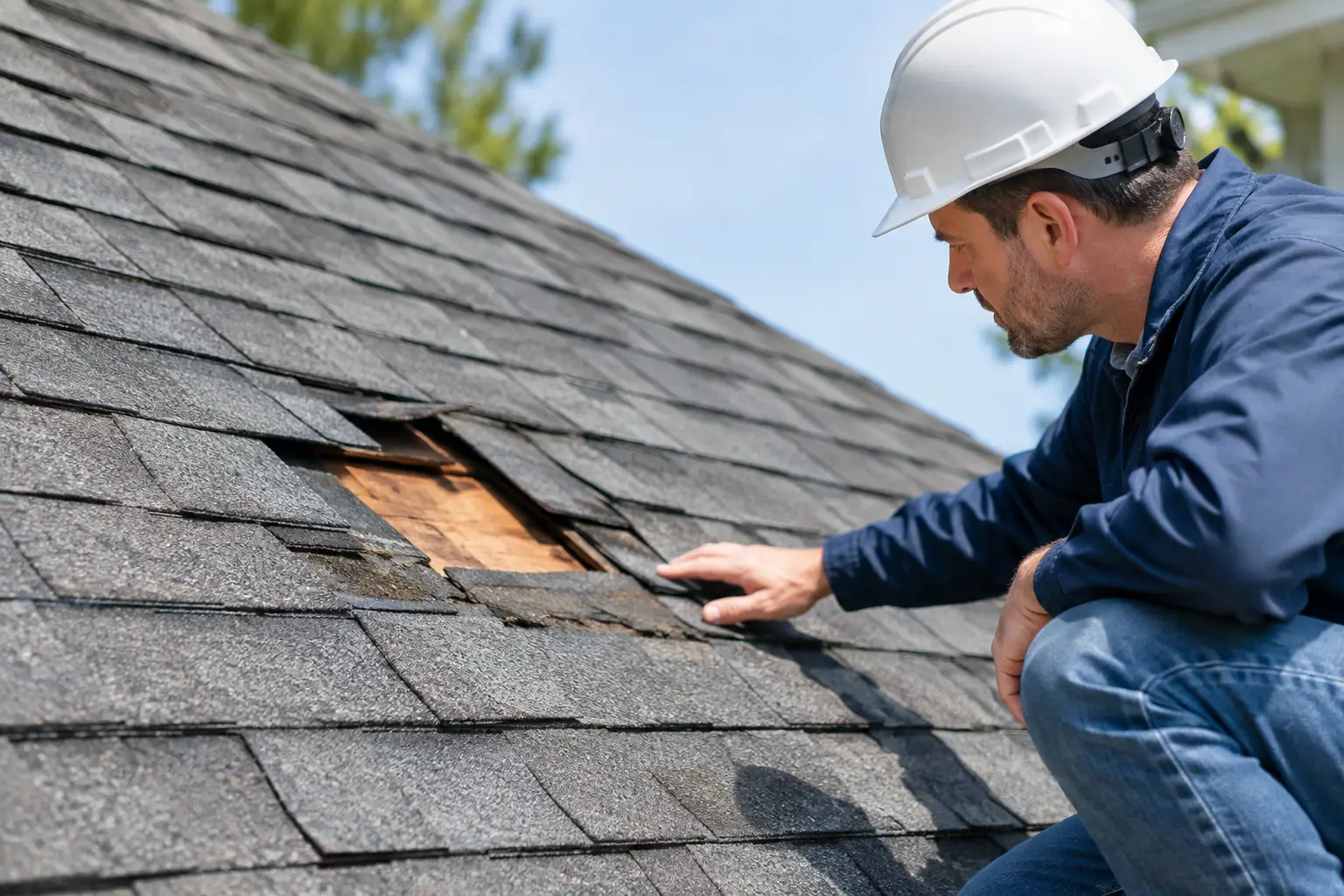
A bare patch on a roof may look minor from the driveway, especially after a windy night. But can missing shingles cause leaks? Yes. A missing shingle can expose the layers designed to shed water away from your home, creating an opening that can turn into a ceiling stain, wet insulation, or hidden wood damage.
The good news is that a missing shingle does not automatically mean your entire roof has failed. The right response depends on where the shingle came off, how long the area has been exposed, the roof’s age, and whether storm damage extends beyond what is visible from the ground. Acting early is usually less expensive than waiting for water to show up indoors.
Why Missing Shingles Can Lead to Roof Leaks
Asphalt shingles are the roof’s first line of defense, but they work as part of a system. Each course overlaps the one below it so rain runs down the roof rather than underneath it. When a shingle is missing, that overlap is interrupted.
Under the shingles, most roofs have underlayment and wood decking. These layers provide backup protection, but they are not intended to remain exposed to repeated rain, snow, wind, and ultraviolet exposure. Water can work beneath the surrounding shingles, especially when wind drives rain sideways or when melting snow refreezes near the roof edge.
The risk is higher around roof features where water changes direction or collects. Valleys, chimneys, skylights, plumbing vents, and sidewalls all require flashing and carefully layered materials. A missing shingle near one of these areas can allow water to bypass the normal drainage path more quickly than a missing shingle in an open field of the roof.
Michigan weather adds another variable. Windstorms can lift nearby shingles even when only one is visibly gone. Freeze-thaw cycles can widen small openings, while ice dams can hold water against the roof surface long enough for it to find a weak point.
A Leak May Not Appear Right Away
One reason homeowners put off a repair is that they do not see water inside immediately. Unfortunately, a dry ceiling is not proof that the roof is dry.
Water often enters at one location and travels along the underside of the roof deck, framing, or insulation before it becomes visible. The first indoor symptom may appear several feet away from the actual opening. It can also take multiple storms before enough moisture accumulates to stain drywall or drip into a room.
That delay matters. By the time a brown ceiling mark appears, moisture may already have affected insulation, roof decking, or wall cavities. A prompt inspection after shingles blow off gives you a clearer picture of the condition before hidden damage has time to spread.
Signs the Missing Shingle Has Become a Problem
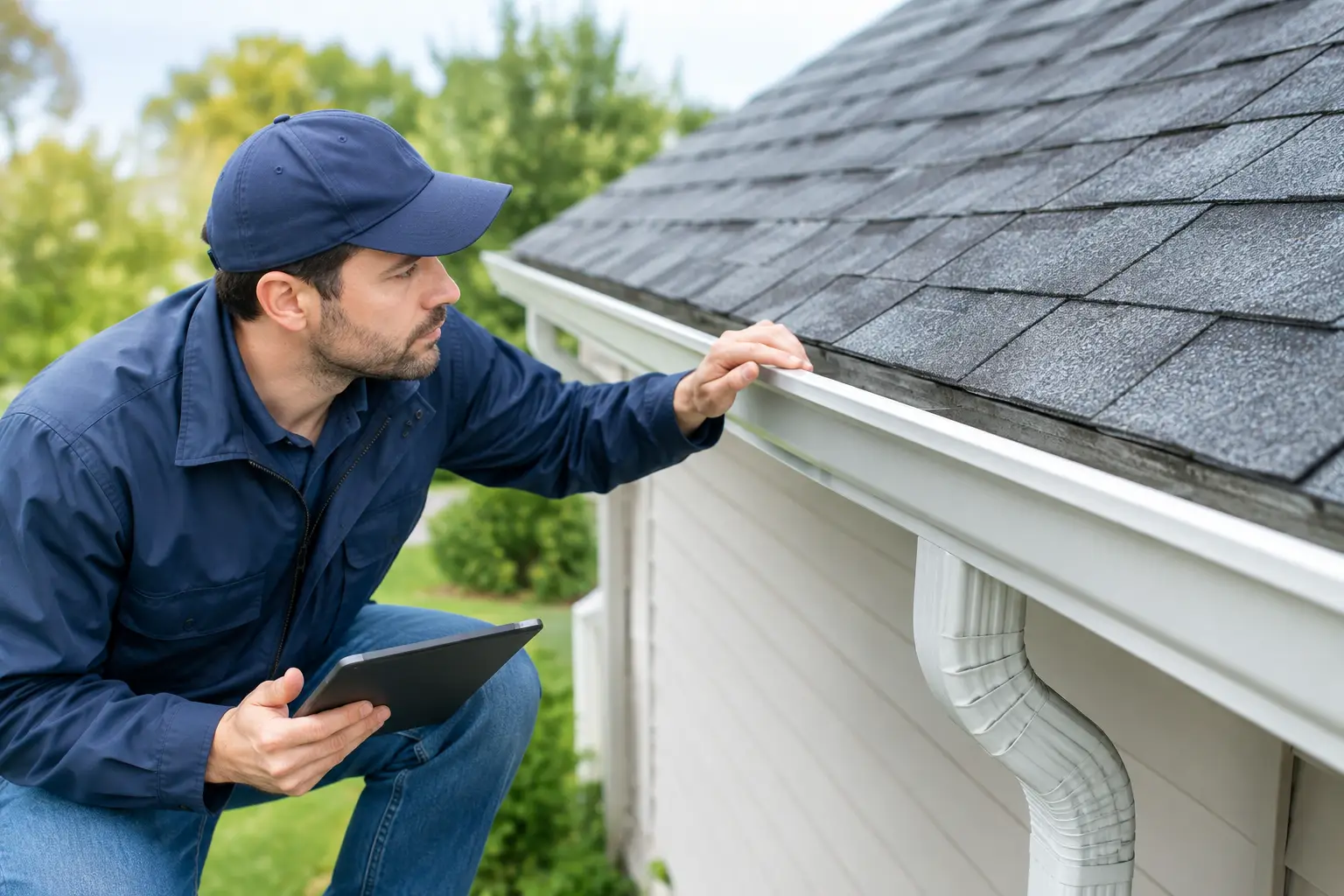
From the ground, look for an obvious patch where the roof surface appears darker, smoother, or different in color from the surrounding shingles. You may also spot curled edges, lifted tabs, or shingle pieces in the yard, gutters, or driveway.
Inside the home, watch for a musty odor in the attic, damp insulation, dark marks on roof decking, or water stains on ceilings and upper walls. Peeling paint near a ceiling line and unexplained moisture around light fixtures also deserve attention. If a ceiling is bulging, actively dripping, or near electrical wiring, move belongings out of the area and arrange professional help promptly.
It is also worth checking the gutters after a storm. Granules that resemble coarse black sand can signal shingle wear, though a small amount of granule loss is normal as roofs age. Large accumulations combined with missing or loose shingles may indicate that the roof is becoming more vulnerable to wind and water.
Can One Missing Shingle Be Repaired?
Often, yes. If the surrounding shingles are secure, the roof deck is dry and sound, and a compatible replacement shingle is available, a focused repair can restore the roof’s water-shedding pattern. This is most practical on a newer roof with isolated wind damage.
There are trade-offs. Shingle colors fade over time, so an exact color match may not be possible even when the same product line is available. A repair can still be functional, but the replacement area may be noticeable from the ground. Older shingles can also become brittle, making a small repair more delicate because lifting adjacent shingles may cause additional cracking.
A repair may not be the best long-term answer if multiple shingles are missing, tabs are lifting across several slopes, the roof is near the end of its expected service life, or the decking has been exposed. In those cases, repairing one spot may solve the immediate opening while leaving the rest of the roof susceptible to the next storm.
What to Do After You Notice Missing Shingles
Start by documenting what you can safely see. Take photos from the ground, note the date of the storm, and save any shingle pieces that landed in your yard. This information can be useful if you decide to review potential storm damage with your insurance carrier.
Avoid climbing onto the roof yourself. Wet shingles, steep slopes, and loose materials create a real fall hazard. A tarp can be a reasonable temporary measure during active leaking, but it must be installed without causing more damage to the shingles or decking. For most homeowners, a professional inspection is the safer route.
During an inspection, ask for clear documentation of the affected areas. You should understand whether the issue is limited to a few shingles, whether flashing or underlayment is exposed, and whether there is evidence of moisture below the surface. A trustworthy contractor should explain the recommended scope in plain language, including what is included and what is not.
When Missing Shingles Point to a Bigger Roofing Issue
Wind damage is not always isolated. Shingles can be creased, unsealed, or lifted without fully blowing off. Once the adhesive seal is broken, a shingle may lie flat again but remain more likely to lift in future winds.
Age also changes the decision. Architectural asphalt shingles are built for durability, but no roof lasts forever. If your roof has widespread granule loss, brittle shingles, recurring small repairs, or frequent leaks after storms, replacement may offer better value than patching each new problem. A full roof system also allows the contractor to inspect decking, replace aging flashing where needed, and install materials designed to work together.
For metro Detroit homeowners, roof edges and drainage deserve special attention. Clogged, undersized, or poorly pitched gutters can contribute to water backing up near the eaves. Replacing a roof without addressing failing gutters can leave a weak point in the exterior system. The right scope depends on the condition of both components, not a one-size-fits-all package.
How a Clear Inspection Helps You Decide
The most useful roof assessment is not a high-pressure sales pitch. It is a documented explanation of what happened, what needs immediate attention, and what can reasonably wait.
Guthix Roofing helps homeowners make that decision with clear inspections, itemized estimates, licensed and insured installation, and written warranty information. Whether the answer is a targeted repair or a roof replacement, you should know the material options, scope of work, and cost before work begins. No hidden costs and no vague recommendations.
If shingles are missing, schedule an inspection before the next heavy rain or snow cycle. A small exposed area is easiest to address while the deck beneath it is still dry, the repair options are still open, and you remain in control of the decision.
Need this done on your Downriver home?
Guthix Roofing is based in Wyandotte and serves Downriver and Wayne County. See roof leak repair from a licensed local roofer, or get an instant satellite-measured price — no name or phone needed to see the number.