
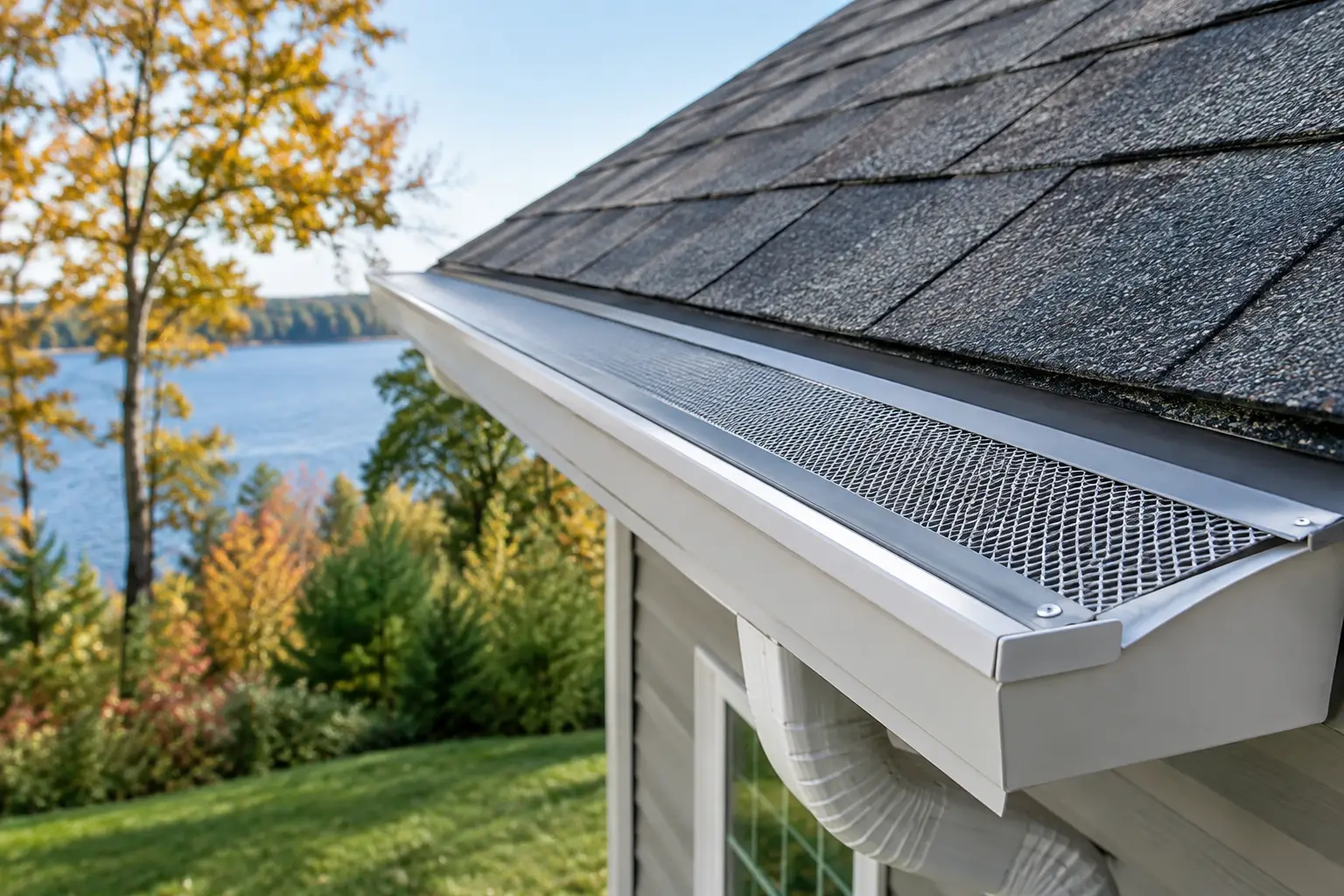
A gutter overflowing during a hard Michigan rain is not a minor maintenance issue. Water can spill against siding, saturate landscaping, pool near the foundation, and work its way into places it does not belong. Gutter guards can reduce the debris that causes those overflows, but they are not a universal fix and they do not make a gutter system maintenance-free.
For homeowners weighing a gutter replacement or trying to solve recurring clogs, the right question is not simply, “Do gutter guards work?” It is whether a guard is compatible with your roof, trees, gutter size, drainage needs, and expectations for upkeep. A clear answer starts with understanding what guards actually do.
What Gutter Guards Are Designed to Do
Gutter guards are covers, screens, or inserts installed over or inside a gutter. Their job is to keep larger debris out while allowing rainwater to enter the gutter and move through the downspouts. Depending on the style, they may block leaves, seed pods, pine needles, roof grit, and shingle debris to different degrees.
Their biggest benefit is reducing how often gutters need to be cleaned. On a home with mature trees nearby, that can be meaningful. A properly selected and installed guard can keep leaves from forming the wet, compacted blockage that sends water over the front edge of the gutter.
That said, every system has limitations. Fine material can still settle on top of a guard or work through openings. Windblown debris can collect in valleys and along the roof edge. In winter, guards do not prevent ice dams or correct poor attic insulation and ventilation. They are a debris-management tool, not a cure for every roof drainage problem.
When Gutter Guards Make Sense
Guards are often a practical investment for homes with frequent leaf buildup, especially when gutters are hard to access safely. A two-story home, a steep roof, or a lot of mature trees can turn routine cleaning into a recurring safety concern and an ongoing expense.
They can also make sense when you are replacing old gutters. Installing guards on a seamless aluminum gutter system gives the contractor an opportunity to match the guard to the gutter profile, hangers, roof edge, and downspout layout. This is usually more straightforward than adding a product to a bent, undersized, or poorly pitched existing system.
In metro Detroit, spring seed drop, summer storms, autumn leaves, and freeze-thaw cycles put gutters through a lot. A well-designed system should move water quickly during a downpour and stay securely attached through changing weather. Guards can support that performance when the underlying gutters are correctly sized and pitched.
The decision is less compelling on a one-story home with few nearby trees and easy ladder access. If debris is minimal and annual cleaning is simple, the added cost may not deliver enough value. Transparent advice should account for that rather than treating guards as a required upgrade for every home.
The Main Types of Gutter Guards
Not all gutter guards handle debris and heavy rain the same way. The best choice depends on the type of debris around your home and the condition of the existing drainage system.
Screen guards
Screen guards are commonly made from metal or plastic with visible openings. They are generally affordable and can stop larger leaves and twigs. The trade-off is that smaller debris, such as maple seeds, roof granules, and pine needles, may pass through or sit on top. Some screen products are easy to remove for cleaning, while others are more permanent.
Micro-mesh guards
Micro-mesh uses a much finer metal screen. It is often better at keeping out small debris and is a strong option for homes surrounded by trees that shed fine material. Quality matters here. A guard needs adequate water intake and a sturdy frame, or it may struggle during heavy rain or deform over time.
Reverse-curve guards
Reverse-curve systems are designed to direct water around a curved edge and into the gutter while debris falls to the ground. They can perform well in some settings, but installation and roof compatibility are especially important. Because the design sits at the roof edge, poor fitting can affect water flow or create issues with certain rooflines.
Foam and brush inserts
Foam and brush products sit inside the gutter rather than covering it. They are usually a lower-cost option, but they can hold debris and moisture. Over time, cleaning or replacement may be necessary. For a long-term gutter replacement project, many homeowners prefer a more durable exterior guard system.
What Gutter Guards Cannot Fix
A guard cannot compensate for gutters that are too small, incorrectly sloped, loose, or damaged. It also cannot solve a downspout that is undersized or discharging water too close to the foundation. Before adding any guard, look at the complete path water follows from the roof to the ground.
Pay attention to these warning signs: water spilling over in the middle of a run, standing water in the gutter after rain, sagging sections, staining on fascia boards, and soil erosion below downspouts. Each points to a system issue that deserves attention before a cover is installed.
Roof condition matters, too. Granules from aging asphalt shingles can collect in gutters and on guard surfaces. If a roof is near replacement, it can be more sensible to coordinate the roof, gutters, and guards rather than paying to remove and reinstall components later. A contractor should explain that sequence clearly, along with what is included in the scope and what is not.
Installation Details That Protect Performance
The product name matters less than the installation details. Guards should be secured so they remain stable through wind, snow, and seasonal expansion. They should not interfere with the roof edge, create a path for water behind the gutter, or leave exposed gaps where debris can enter.
The gutter itself needs the right pitch toward the downspouts. Too little pitch can leave standing water; too much can look uneven and reduce capacity at one end. Seamless aluminum gutters are formed to the home for fewer leak-prone joints along the run, but they still need secure hangers and properly planned outlets.
Ask how the guard integrates with the roof system and whether its installation affects warranty coverage. Also ask what maintenance the manufacturer recommends. A credible answer will not be “none.” Even high-quality guards benefit from occasional visual checks, particularly after storms and during heavy leaf season.
Questions to Ask Before You Buy
A good gutter guard decision should come with clear, written answers. Ask what debris the product is designed to handle, how it performs in heavy rain, and whether your roofline creates any special concerns. If you have pine trees, maples, or a lot of roof valleys, say so. Those details affect the recommendation.
You should also ask whether gutter repairs, new downspouts, or drainage extensions are needed before installation. Request an itemized estimate that separates the gutter work, guard system, removal, and any repairs. That makes it easier to compare proposals without guessing what has been left out.
Finally, confirm who performs the installation, whether the crew is licensed and insured, and what written workmanship and product warranties apply. A lower initial price can become expensive if guards must be removed to fix loose gutters, fascia damage, or poor drainage later.
A Better Way to Decide
The right gutter guard is the one that addresses a real problem without creating a new one. If your home repeatedly clogs with leaves and cleaning is difficult, a quality guard paired with properly sized, securely installed gutters can reduce maintenance and help keep water away from the foundation. If your gutters are failing, start with the system itself rather than covering the problem.
For a replacement project, ask for a documented assessment of your roof drainage, gutter condition, downspout layout, and guard options. Clear scope, itemized pricing, and written protections matter just as much as the material selected. That is how you make a practical improvement to your home with fewer surprises when the next hard rain arrives.
Need this done on your Downriver home?
Guthix Roofing is based in Wyandotte and serves Downriver and Wayne County. See seamless gutter replacement from a licensed local roofer, or get an instant satellite-measured price — no name or phone needed to see the number.