A gutter that overflows near the front door may look like a small maintenance problem. But water that repeatedly spills beside the foundation, runs behind siding, or freezes on a walkway can become a far more expensive repair. Gutter replacement vs repair is not simply a question of the lowest price today. It is a decision about whether your existing system can still move water away from your home reliably through Michigan rain, snow, ice, and freeze-thaw cycles.
A good inspection should give you a clear answer. You should know what is damaged, why it happened, what work is proposed, and whether a repair will reasonably last. If those details are not documented, it is hard to compare options or avoid paying twice for the same problem.
Gutter Replacement vs Repair Starts With the Problem
Some gutter issues are isolated and repairable. Others point to a system that has reached the end of its useful life. The difference matters because patching one small defect can be sensible, while repeatedly patching an aging system usually delays a replacement that is already needed.
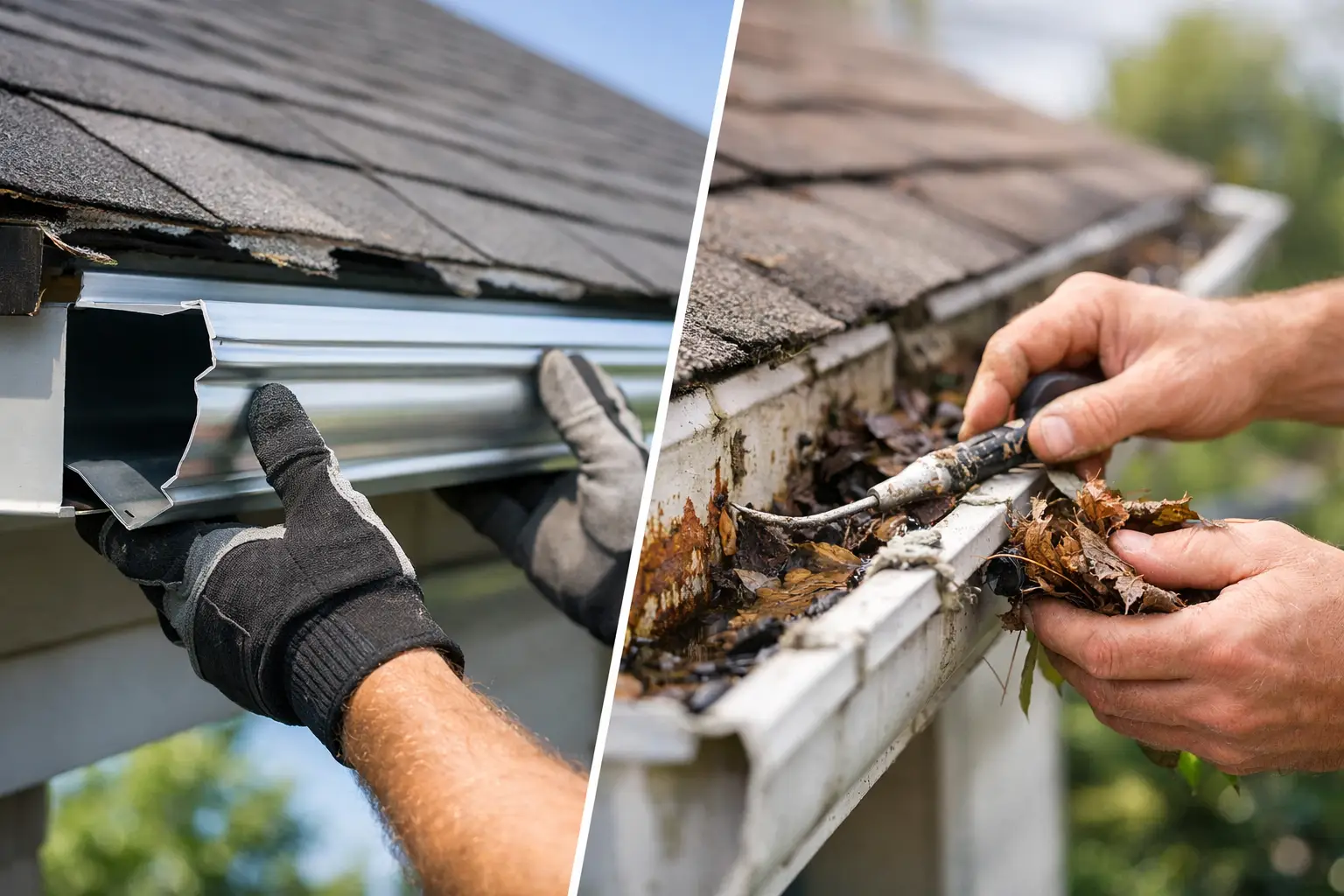
Repair is often the right call when the gutter is generally in good condition and the problem has a specific cause. A loose hanger, a separated corner seam, a short downspout extension, or a section clogged with debris can often be corrected without replacing the entire system. The surrounding gutter should be firmly attached, properly sloped, and free of widespread corrosion or distortion.
Replacement is usually the better investment when the problems are recurring or spread across multiple sections. Gutters that pull away from the fascia, hold standing water, sag between hangers, leak at several seams, or show extensive dents and corrosion are no longer doing their job consistently. A system that was installed in undersized sections or lacks enough downspouts may also need redesign rather than another patch.
The key question is simple: are you fixing one failure, or trying to keep an unreliable system alive?
When a Repair Makes Sense
A targeted repair can protect your home and control costs when the gutter system still has solid years left. For example, a single leaking end cap may need resealing, or a downspout that has come loose may only need to be resecured and redirected farther from the foundation.
Repairs are also practical after a localized event. A ladder impact, fallen branch, or ice damage may affect one section while the rest of the gutters remain straight, secure, and properly pitched. In that situation, replacing only the affected run may be appropriate if the material and color can be matched closely.
Before approving a repair, ask the contractor to identify the source of the water issue. Overflow is not always caused by a hole in the gutter. It can result from poor slope, a blocked downspout, roof valleys that send concentrated water into one area, or gutters that are too small for the roof section they serve. Sealing a seam will not solve a drainage design problem.
A repair should come with a defined scope. You should be able to see whether the quote includes resealing, re-pitching, hanger replacement, downspout work, debris removal, or fascia repair. Clear line items prevent assumptions and help you understand what result to expect.
Signs Gutter Replacement Is the Safer Choice
Replacement becomes more compelling when repairs are no longer isolated. If you have called for gutter service several times in a few years, the system may be telling you it needs more than another adjustment.
Watch for these four patterns:
- Multiple seams or corners leaking, especially after sealing attempts
- Sagging, pulling, or separation from the roofline in more than one area
- Persistent standing water inside the gutters after dry weather
- Water damage on fascia boards, soffits, siding, landscaping, or near the foundation
Seam failures deserve special attention. Traditional sectional gutters have joints at corners and along the run, and each joint is a potential future leak point. Seamless aluminum gutters are formed on-site to fit each roofline, reducing the number of joints across long runs. Corners and end caps still require careful workmanship, but there are fewer connection points to maintain over time.
Replacement can also make sense when your roof is being replaced. Gutters are not always required with a new roof, but coordinating the work can be more efficient. The contractor can inspect the fascia, confirm proper roof-edge drainage, and install a system designed around the finished roof rather than working around old materials.
Consider the Parts You Cannot See From the Ground
Homeowners often notice a gutter only after it starts overflowing. The hidden parts of the system are just as important. Fascia boards behind gutters can rot when water leaks or backs up for years. Downspouts may discharge too close to the foundation. Improperly placed hangers can allow a gutter to flex under snow and ice loads.
This is why a quick visual guess is not enough. A proper inspection should look at the gutter’s slope, attachment, outlet locations, downspout capacity, drainage path, and the condition of the wood behind the system. It should also consider the roof itself. Water running behind a gutter can be related to damaged drip edge, flashing issues, or a roof drainage detail that needs correction.
In southeast Michigan, winter makes these details more consequential. Ice can add weight to a gutter, while frozen downspouts can force melting water to spill over the edge. No gutter system eliminates every ice-related issue, especially during severe weather, but correct sizing, secure fastening, sound drainage, and well-maintained roof edges reduce avoidable stress on the system.
Cost: Compare the Full Value, Not Just Today’s Invoice
Repair generally costs less upfront, which is why it is attractive. If the repair solves a contained issue, that is money well spent. The problem comes when a homeowner pays for repeated sealing, rehanging, and section replacement while water continues to threaten the house.
When comparing estimates, look beyond the total at the bottom. Ask what materials are being installed, whether the gutters are seamless, how many downspouts are included, how the old system will be removed, and whether fascia damage is included or excluded. Confirm that the installation crew is licensed and insured, and ask what written warranty applies to both materials and workmanship.
A low quote can leave out essential drainage work. A higher quote may include custom-formed gutters, additional outlets, larger downspouts, stronger fastening, disposal, and documented warranty coverage. Neither number tells the full story without a written scope.
For replacement projects, aluminum remains a practical choice for many Detroit-area homes because it resists rust, can be formed into seamless runs on-site, and is available in colors that complement common siding and trim. The right size and layout still matter more than color alone. A well-installed system must collect water efficiently and move it far enough away from the home.
How to Make a Confident Decision
Start by documenting what you see. Take photos after rain if possible, noting where water overflows, pools, or stains exterior surfaces. Then request an inspection that explains the condition of the entire drainage system, not just the most visible leak.
If repair is recommended, ask how long the contractor expects it to last and whether other sections are likely to fail soon. If replacement is recommended, ask why repair is no longer cost-effective and what improvements the new layout will provide. Straight answers are more useful than pressure tactics.
For a replacement, insist on an itemized estimate before work begins. It should identify the gutter material, size, color, downspouts, removal, installation details, warranty, and any wood repairs that may be needed. This is how you avoid hidden costs and zero-surprise projects become possible.
Guthix Roofing provides homeowners with clear, documented recommendations and seamless aluminum gutter systems formed on-site for a custom fit. Whether the right answer is a focused repair or full replacement, the goal is the same: keep water moving away from the home before a manageable exterior issue turns into foundation, siding, or roof-edge damage.
The best next step is not to wait for the next heavy storm. Get the system inspected while you can make a calm, informed decision based on condition, drainage performance, and a written scope of work.
Need this done on your Downriver home?
Guthix Roofing is based in Wyandotte and serves Downriver and Wayne County. See seamless gutter replacement from a licensed local roofer, or get an instant satellite-measured price — no name or phone needed to see the number.