A roof color can make a well-kept home look finished, or make a new roof feel slightly out of place for the next 20 years. That is why choosing Owens Corning Duration shingles colors deserves more thought than picking the sample that looks best under showroom lighting. Your roof is one of the largest visible surfaces on your property, and the right color should work with your brick, siding, trim, landscaping, and the changing light we see across southeast Michigan.
Owens Corning Duration® shingles are a premium architectural shingle option built for dimensional appearance and dependable weather performance. The color decision is separate from the performance decision, but it still affects curb appeal, resale perception, and how satisfied you feel every time you pull into the driveway.
Start With Your Home’s Fixed Elements
The safest way to choose a roof color is to start with the features you are not replacing. Brick, stone, siding, exterior paint, window trim, and gutters all have undertones. A roof should support those undertones rather than compete with them.
Brick is especially important. Red brick can lean warm, cool, orange, or brown depending on the mortar and variation in the brick itself. A deep brown or warm blended shingle may work beautifully with earthy brick, while a cooler gray can give red brick a sharper, more updated contrast. With gray brick or stone, a gray, black, or blue-gray roof often feels more cohesive.
For homes with vinyl or fiber-cement siding, look beyond the main siding color. White siding, for example, is rarely just white. It may have warm cream trim, black shutters, a tan brick foundation, or bronze exterior lighting. Those secondary details can point you toward a warmer brown blend, a balanced gray, or a near-black roof.
Avoid trying to match a roof precisely to siding or brick. Architectural shingles have tonal variation by design, and exact matches can make the exterior look flat. The goal is coordination, not uniformity.
Owens Corning Duration Shingles Colors: Warm, Cool, and Neutral
Most homeowners can narrow the field by deciding whether their exterior needs a warm, cool, or neutral roof color. This is more useful than starting with a list of color names.
Warm options often include brown, tan, copper, and weathered blends. Colors such as Brownwood, Driftwood, Teak, or Aged Copper can complement beige siding, brown brick, natural stone, warm white trim, and homes with an earthy, traditional appearance. These blends tend to feel inviting and can hide ordinary dust and leaf debris reasonably well.
Cool options include gray, slate, blue-gray, and charcoal-toned blends. Estate Gray, Sierra Gray, Colonial Slate, and similar profiles can pair well with white, light gray, blue, or black-and-white exteriors. A cool roof can make a home feel crisp and current, particularly when it ties into dark window frames, shutters, or a charcoal front door.
Neutral options bridge the gap. Driftwood and certain weathered gray-brown blends can work when a home has both warm and cool elements, such as tan brick with gray siding or cream trim with black accents. For many metro Detroit homes, this flexibility is valuable because exterior materials may have been updated at different times.
Very dark colors, including Onyx Black and other charcoal options, create strong contrast and a clean outline. They can look excellent on white, light gray, and modern farmhouse-style homes. The trade-off is that a dark roof shows pollen, dust, and fading leaves more clearly than a mid-tone blend. It can also absorb more heat, although attic ventilation, insulation, and proper roof-system installation matter more to interior comfort than color alone.
Do Not Choose From a Screen Alone
Photos, online visualizers, and phone screens are useful starting points, not final approval tools. Screen settings alter color, and a roof appears different in direct sun, shade, overcast weather, and late-afternoon light.
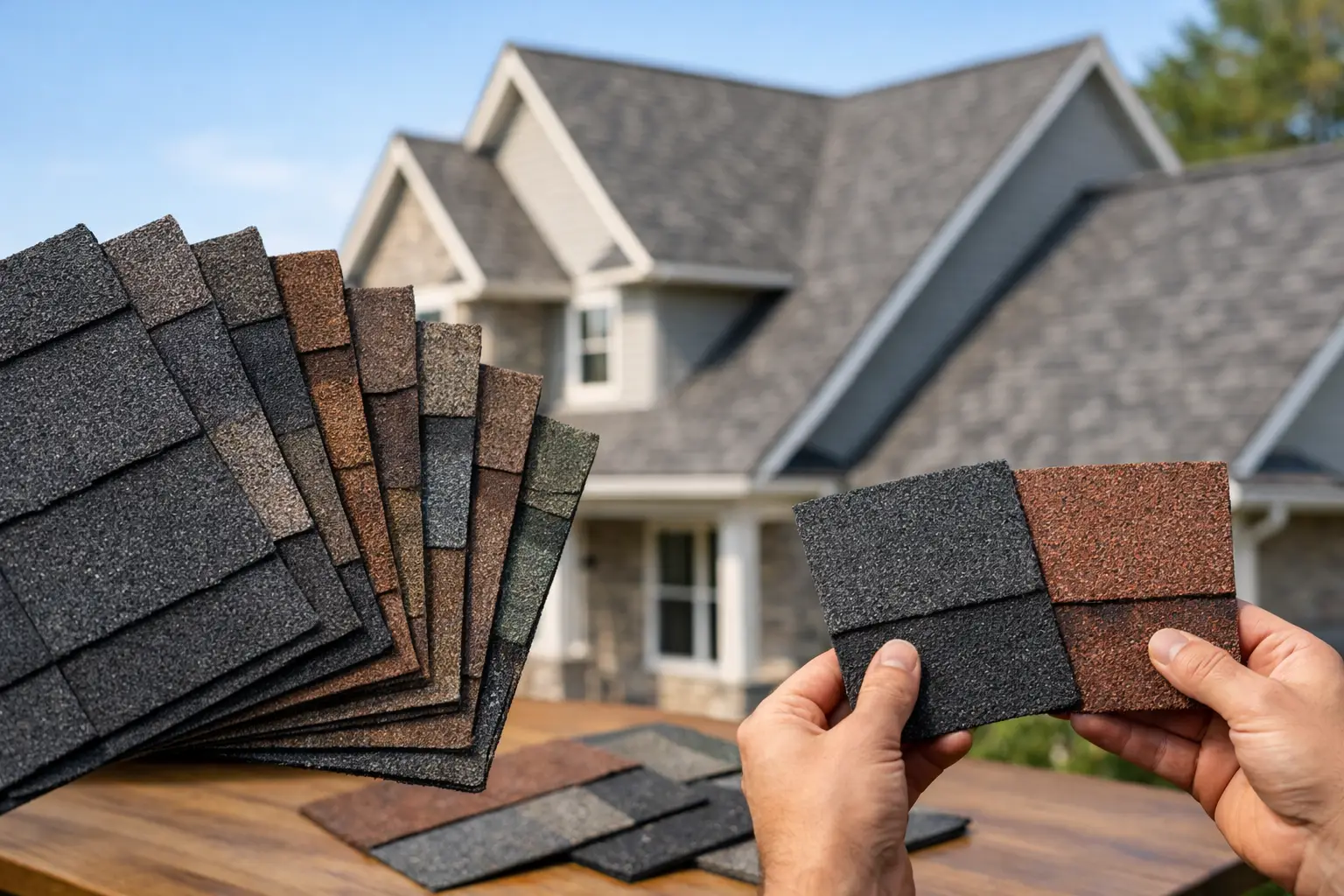
Use Owens Corning’s Color Studio to test combinations against a home similar to yours, then ask to view actual shingle samples outside. Hold the samples next to siding or brick at different times of day. A color that reads as soft gray in a small sample may look much darker once it covers an entire roof plane.
If possible, look at nearby homes with the same or similar shingle color. View them from across the street, not only from the sidewalk. That is the distance where the roof’s overall tone and contrast become clear.
Consider Michigan Weather and Light
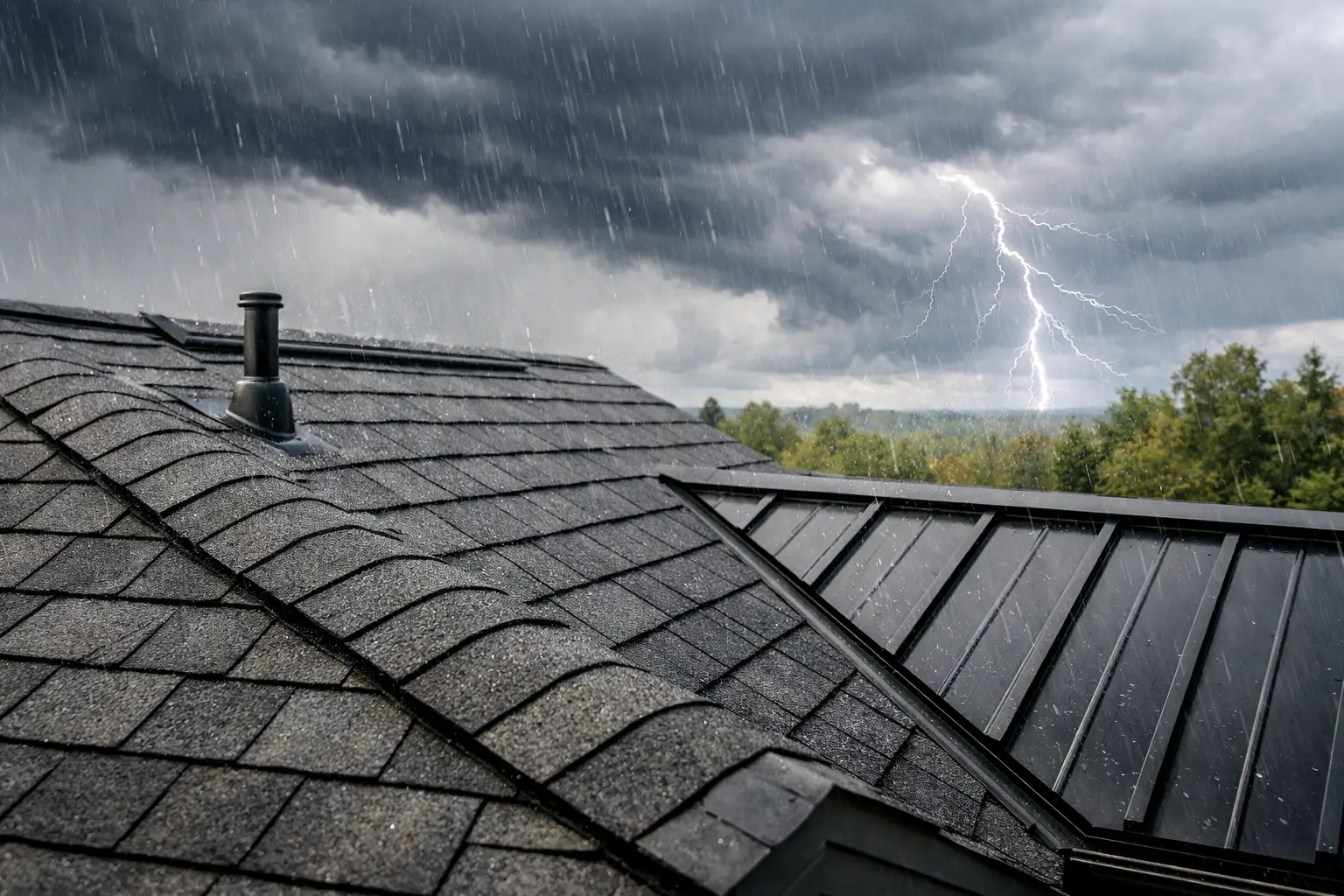
Michigan homes experience bright summer sun, gray winter skies, heavy rain, leaf drop, and snow cover. Those conditions do not dictate one correct color, but they should shape expectations.
A mid-tone shingle is often the most forgiving choice. It provides definition without making every bit of debris or staining obvious. Gray-brown, weathered, and blended colors are especially practical on heavily treed lots or homes close to busy roads.
Dark roofs can be striking against snow and light siding, but they may look nearly black under cloudy skies. Lighter tan and beige roofs can brighten a dark exterior, though they may feel less compatible with cool gray stone or stark white-and-black designs. The best choice depends on whether you want the roof to blend into the overall exterior or act as a deliberate visual anchor.
Also consider the roof’s complexity. A simple gable roof can carry a stronger color because there is less visual movement. A home with many dormers, valleys, hips, or steep angles already has plenty of architectural detail. On those homes, a balanced mid-tone color may create a calmer, more refined result.
Match the Roof to the Style of the Home
Color trends matter, but a roof should not be chosen only because it is popular this year. Roof replacement is a long-term decision, and the best color usually respects the home’s architecture.
Traditional colonials and brick ranches often look natural with brown, gray, black, or weathered blends. Craftsman-style homes can support richer earth tones, copper blends, and textured gray-browns. Contemporary exteriors often benefit from clean charcoal, black, slate, or cool gray selections.
If resale is part of the decision, neutral colors are generally the lower-risk option. That does not mean every home needs a gray roof. It means the color should be easy for a future buyer to understand in context. A bold blue-gray or plum-toned blend may look exceptional on the right home, but it should be chosen because it supports the exterior, not because it stood out on a sample board.
Check Gutters, Trim, and Accent Colors
A new roof is a good time to consider how the gutters fit into the exterior palette. Gutters do not need to match the roof. In most cases, matching gutters to fascia or trim keeps the roofline clean and lets the shingles do their job visually.
Black gutters can reinforce a dark roof and window package. White gutters often disappear against white trim. Bronze or dark brown gutters can complement warm brick and brown roof blends. If gutters are also being replaced, deciding on both systems together prevents a last-minute color mismatch.
Confirm the Exact Product and Color Before Installation
Shingle color names and availability can vary by product line, distributor inventory, and region. Before signing off, confirm that the selected color is available in the specific Owens Corning Duration product being installed. A proposal should identify the shingle line and color clearly, along with the rest of the roof system scope.
This is where written documentation matters. Your estimate should make it clear what is included: tear-off, underlayment, ice and water protection where required, ventilation work, flashing details, cleanup, and warranty information. Color is an important choice, but it is only one part of a roof that needs to perform through Michigan winters and summer storms.
At Guthix Roofing, homeowners can start with a satellite-measured price in 60 seconds, then review material choices and scope without a high-pressure sales visit. That gives you room to compare color options with the same care you bring to the rest of the project.
The right roof color is the one that still looks intentional after the sample board is gone, the landscaping changes, and the weather shifts. Take the samples outside, compare them against the parts of your home that are staying, and choose the option that makes the entire exterior feel settled rather than simply new.
Need this done on your Downriver home?
Guthix Roofing is based in Wyandotte and serves Downriver and Wayne County. See roof replacement from a licensed local roofer, or get an instant satellite-measured price — no name or phone needed to see the number.