A roof quote should not begin with a stranger walking around your property and refusing to discuss price. A satellite roof measurement estimate gives homeowners a practical starting point: a measured view of the roof, a documented pricing basis, and a clearer sense of what replacement may cost before scheduling a sales appointment.
For metro Detroit homeowners, that matters. Roof replacement is a major investment, and Michigan weather does not leave much room for guesswork. Satellite technology can make the first step faster and more transparent, but it is not a substitute for a proper inspection. The best process uses both: remote measurements for speed, then an on-site review to confirm the visible conditions that affect the final scope.
What a Satellite Roof Measurement Estimate Measures
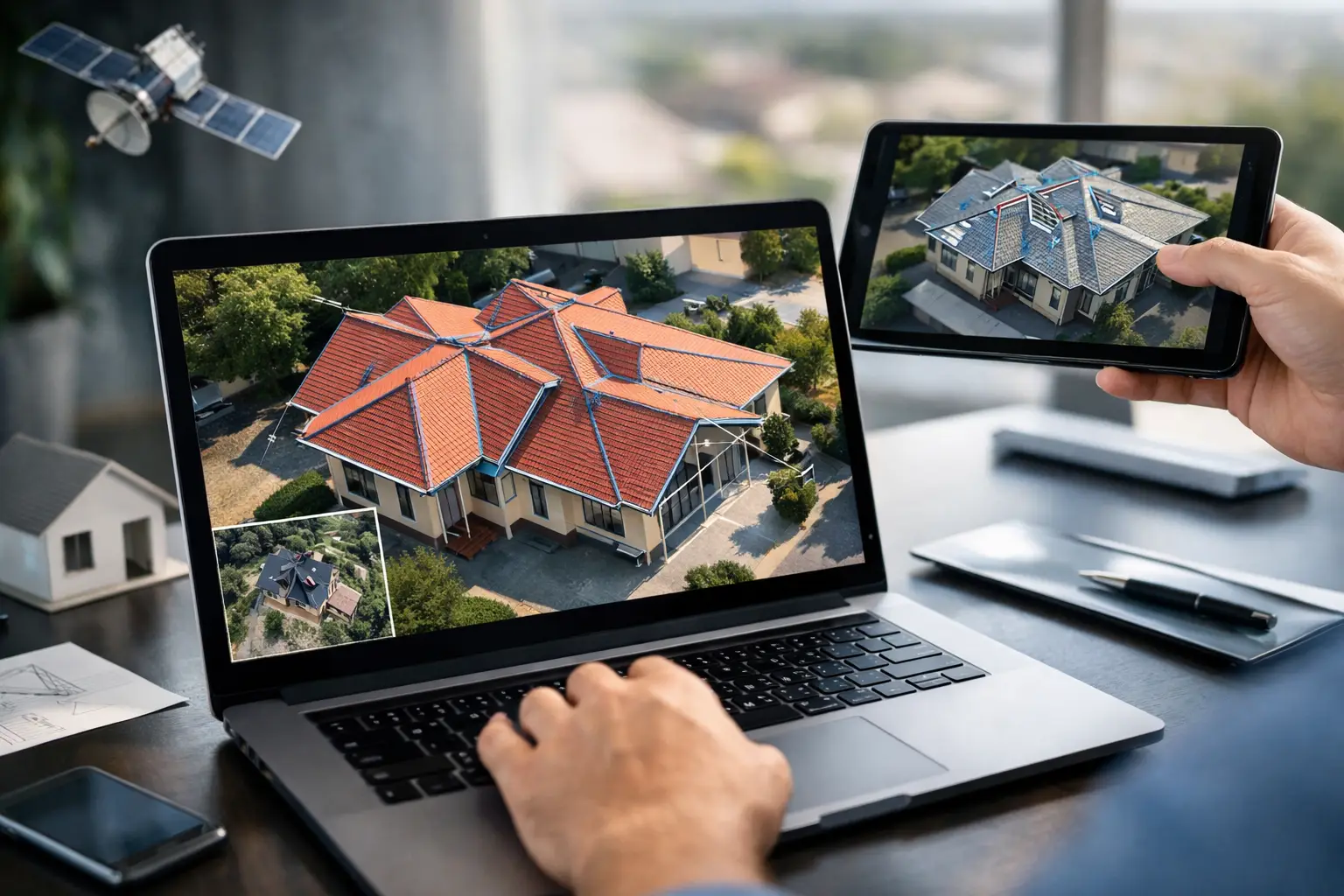
Satellite roof measurement tools use high-resolution aerial imagery, mapping data, and roof-modeling software to calculate the size and geometry of a home’s roof. The result is not just a square-footage guess from a property record. It is a roof diagram that can identify major planes, ridges, hips, valleys, eaves, rakes, and pitch.
Those measurements help a contractor estimate how many roofing squares of shingles, underlayment, starter shingles, ridge cap, flashing materials, and related components a project will require. One roofing square equals 100 square feet of roof surface, not 100 square feet of living space. A 2,000-square-foot home can have a substantially larger or smaller roof depending on its layout, overhangs, garage, additions, and roof pitch.
The software also helps account for waste. Roofs with several valleys, dormers, intersecting planes, or steep sections require more cuts and more material than a simple rectangular gable roof. A transparent estimate should reflect that difference rather than applying one flat price to every home.
For homeowners, the advantage is straightforward: you can receive a price range or initial itemized estimate without waiting for someone to climb on the roof. At Guthix Roofing, that means homeowners can get a starting price in about 60 seconds and decide whether a full consultation makes sense on their terms.
What a Satellite Estimate Can Tell You
A well-built remote estimate can provide useful detail before anyone visits the property. It can show the approximate roof area, roof complexity, likely material quantities, and the labor involved in removing and installing a new shingle system. It can also help identify whether gutters may need separate attention based on the roofline and eave configuration.
For a typical architectural asphalt shingle replacement, the estimate can create clear line items around the major parts of the job. That includes tear-off and disposal, roof deck preparation, underlayment, ice and water protection in vulnerable areas, flashing work, ventilation components where applicable, shingles, ridge cap, and cleanup.
This is where homeowners should look beyond a single “roof replacement” number. A lower price may exclude critical components or assume conditions that have not been verified. A useful estimate explains what is included, what is assumed, and what could change after inspection. Clear scope is more valuable than a vague low number.
Satellite measurements are especially helpful for comparing options. A homeowner may want to see the difference between a basic shingle selection and a premium architectural system such as Owens Corning Duration® shingles. With the roof area already modeled, material choices can be priced consistently instead of being discussed in broad, hard-to-compare terms.
Where Satellite Measurements Have Limits
A satellite image can measure a roof’s shape very well, but it cannot see through existing shingles, inspect flashing up close, or confirm the condition of the wood underneath. That distinction is important. The remote estimate is a strong pricing tool, not a promise that no field condition will ever affect the work.
An on-site inspection is still needed to verify details such as the existing number of shingle layers, soft or damaged decking, chimney and wall flashing conditions, ventilation, access for the crew, and code-related requirements. Tree cover, snow cover, shadows, or older aerial imagery can also limit what the software can identify.
Decking is one of the most common variables. If a roof deck has rot, water damage, or structural deterioration, it should be repaired before new shingles are installed. No responsible contractor should cover known bad wood just to preserve an early quote. The right approach is to state how deck repairs are handled, document any affected areas, and explain the cost before additional work proceeds.
The same principle applies to hidden flashing problems or unexpected conditions around skylights, chimneys, and low-slope transitions. These are not reasons for a contractor to leave pricing vague. They are reasons to explain allowances, inspection findings, and potential change conditions in writing.
Why Pitch and Complexity Change Roof Pricing
Two neighboring homes can look similar from the street and still have very different roof replacement costs. Roof pitch is one reason. A steeper roof requires additional safety precautions, more careful material handling, and more labor to install correctly. It may also have more actual roof surface than a flatter home with the same footprint.
Complexity is another factor. Dormers, valleys, multiple levels, attached garages, bay windows, skylights, and intersecting rooflines all create transitions that need precise installation. Valleys and flashing areas are not places to cut corners. They direct water, snowmelt, and ice away from the home, which makes correct underlayment and flashing details especially important in southeast Michigan.
A satellite report helps quantify this complexity early. The inspection then confirms how those details should be addressed in the actual installation. That combination helps prevent the frustrating situation where a homeowner receives one price over the phone and a different, unexplained number after a contractor arrives.
How to Read a Roof Estimate Without Guessing
When reviewing a satellite-based roof estimate, start with the scope rather than the total. Confirm whether the estimate includes complete tear-off, disposal, delivery, site protection, cleanup, and a magnetic sweep for loose nails. Ask whether the price includes all standard flashing work, starter shingles, ridge cap shingles, underlayment, and ice and water protection.
Then look at the materials by name. “Architectural shingles” is a category, not a full specification. The estimate should identify the manufacturer and product line, along with the warranty coverage available for the selected system. It should also clarify whether ventilation components are included or whether the existing setup must be evaluated first.
Pay attention to exclusions and conditional items. Deck replacement, structural repairs, chimney work, skylight replacement, and gutter replacement may not belong in a base roof price. That is not automatically a red flag. The concern is whether these items are clearly separated and whether the contractor explains how pricing will be handled if they become necessary.
A good estimate should answer practical questions: What is being installed? What is removed? Who is responsible for permits when needed? Is the crew licensed and insured? What workmanship warranty is provided? How will landscaping, siding, and driveways be protected? Homeowners should not need to chase down those answers after signing.
From Remote Price to Final Scope
The most efficient roofing process follows a simple sequence. First, the contractor builds a satellite measurement model and provides an initial price based on the visible roof geometry and selected materials. Next, an inspector confirms the site conditions, reviews access and details, and documents anything that changes the scope. Finally, the homeowner receives a written agreement that reflects the confirmed work.
This process reduces unnecessary appointments without skipping the safeguards that matter. You should not need an in-home sales presentation just to learn whether a roof replacement is financially realistic. But you also deserve an in-person confirmation before a major project begins.
For homeowners comparing quotes, consistency matters. Ask each contractor to price the same scope, material level, and tear-off assumptions. A price comparison is only useful when the work being compared is actually equivalent. One bid may look lower because it excludes ice protection, uses lower-grade components, or leaves critical details undefined.
A Faster Quote Should Still Be a Clear Quote
Satellite measurement technology has changed the first conversation about roof replacement. It can make pricing faster, remove pressure from the process, and give homeowners useful information before committing time to a sales visit. What it should never do is hide uncertainty behind a polished number.
The right contractor will use remote measurements to give you a fast, documented starting point, then verify the roof carefully before installation. Ask for the scope in writing, ask what could affect the final price, and choose the team that answers directly. That is how a quick estimate becomes a roof project with zero surprises.
Need this done on your Downriver home?
Guthix Roofing is based in Wyandotte and serves Downriver and Wayne County. See roof replacement from a licensed local roofer, or get an instant satellite-measured price — no name or phone needed to see the number.