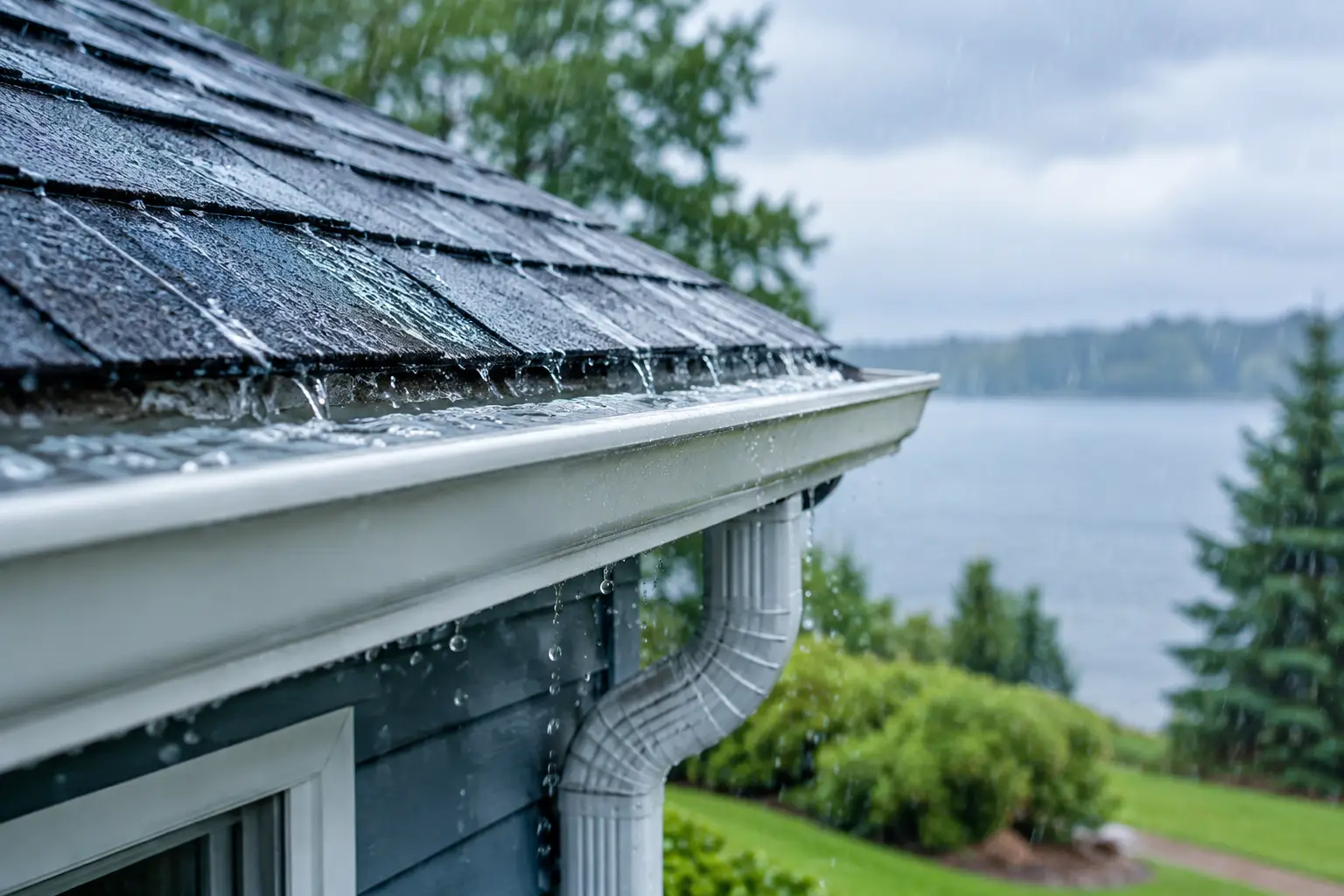
A hard Michigan rain can expose a weak gutter system in minutes. Water spills over the front edge, pounds the landscaping, runs toward the foundation, and can leave staining on siding or dampness near the basement wall. The best gutters for heavy rain are not simply the largest gutters available. They are a properly sized, securely installed system with enough downspout capacity to move roof runoff away from the house.
For most metro Detroit homeowners, the best answer is seamless aluminum gutters sized to the roof and paired with correctly placed downspouts. That sounds straightforward, but the details matter. A new gutter system should account for roof area, roof pitch, valleys, local rainfall, drainage routes, and the condition of the fascia behind the gutters.
Why Heavy Rain Overwhelms Gutters
Gutters overflow for two main reasons: they cannot carry the volume of water coming off the roof, or the water cannot exit quickly enough through the downspouts. Clogs can cause either problem, but clean gutters can still overflow when they are undersized or poorly designed.
A steep roof sheds water faster than a low-slope roof. Roof valleys concentrate runoff from two planes into one small area. A long run of gutter may collect water from a large section of roof before it reaches a downspout. During a summer cloudburst, those conditions can push a standard system beyond its capacity even when it looked adequate during ordinary rainfall.
Installation problems add to the issue. Gutters need a subtle, consistent slope toward the downspouts. Too little slope allows standing water and debris buildup. Too much slope can make the gutter look uneven and may reduce capacity at the high end. Loose hangers, improperly sealed corners, and damaged fascia can also turn a rainfall problem into a repair problem.
Best Gutters for Heavy Rain: Start With the Right Size
For many homes, a 5-inch K-style gutter is a common baseline. It works well on modest roof areas with straightforward drainage. But a 6-inch K-style gutter is often the better choice for homes with large roof planes, steep slopes, multiple valleys, or recurring overflow issues.
The difference is meaningful. A 6-inch gutter has substantially more carrying capacity than a 5-inch profile, and it gives water more room to move during intense rainfall. It is not automatically necessary on every house, but it can be a practical upgrade when the roof sends a high volume of water to a few concentrated areas.
Half-round gutters can also perform well, particularly when they are sized appropriately and installed with adequate downspouts. However, K-style gutters are often the more practical option for residential homes because their shape provides strong capacity and fits many architectural styles. They are widely available, easy to service, and typically more cost-effective than specialty profiles.
The right size should be based on the roof, not a one-size-fits-all sales pitch. A clear estimate should identify the gutter profile, linear footage, downspout size, and any areas where added capacity is recommended. That gives you a documented scope instead of a vague promise that the new gutters will handle the rain.
Downspouts matter as much as the gutter
A larger gutter does not solve much if the downspouts are too small, too few, or poorly positioned. Downspouts are the exit route for roof runoff. When they cannot keep up, water backs up in the gutter and eventually spills over.
For heavy-rain performance, wider downspouts are often a smart match for 6-inch gutters. A contractor may also recommend additional downspouts near valleys, long gutter runs, or areas where water visibly overshoots during storms. This is often more effective than simply installing a larger gutter everywhere.
Downspouts should discharge well away from the foundation. Extensions, underground drainage connections, or properly designed splash blocks can help direct water toward an appropriate drainage area. The goal is not only to collect water from the roof, but to keep it from soaking the soil beside your home.
Why Seamless Aluminum Is Usually the Best Material
Seamless aluminum is the most common recommendation for good reason. It is lightweight, rust-resistant, available in many colors, and formed on-site to fit the home. Because seamless gutters have fewer joints along straight runs, they have fewer places where leaks can develop over time.
Aluminum also handles Michigan's changing weather well when it is properly supported. It will not rust like unprotected steel, and it offers reliable performance without the high price of copper. For most homeowners, it provides the best balance of durability, appearance, and cost.
Steel gutters can be strong, but they require careful coating protection because rust becomes a concern once the finish is compromised. Copper is long-lasting and visually distinctive, but it is a premium material that may not fit every budget or home style. Vinyl gutters are inexpensive, yet they can become brittle in cold weather and may sag or separate more easily than a professionally installed aluminum system.
That is why seamless aluminum remains the practical choice for most residential gutter replacements in southeast Michigan. The material is only part of the equation, though. Even premium aluminum gutters will underperform if the layout and fastening are wrong.
The Installation Details That Prevent Overflow
The best gutter material cannot compensate for weak installation. Before replacement begins, the installer should inspect the fascia, soffit edges, roof drip edge, and areas of existing water damage. Gutters need solid wood behind them. Covering rotten fascia with a new gutter may hide the issue briefly, but it does not protect the system or the home.
Proper hanger spacing is also essential. Gutters carry a considerable load when filled with water, wet leaves, or ice. Secure hangers fastened into sound framing help prevent sagging and keep the system aligned. A clean, consistent gutter line is not just cosmetic. It supports drainage and helps the system stay in place through seasonal weather.
Pay close attention to roof valleys. If a valley sends a concentrated sheet of water directly into one section of gutter, that area may need a larger gutter, a strategically located downspout, or a splash guard. Splash guards can help in select locations, but they should not be used to cover up a system that is fundamentally too small or improperly sloped.
Drip edge matters as well. It helps guide water from the roof into the gutter rather than behind it. When water repeatedly gets behind the gutter, it can damage fascia boards, stain exterior finishes, and create conditions for rot. This detail is easy to overlook because it sits near the roof edge, but it is part of a complete water-management system.
Do Gutter Guards Help in Heavy Rain?
Gutter guards can reduce the maintenance burden, especially on homes near mature trees. They are not a substitute for correct gutter sizing, downspout capacity, or sound installation. A guard that restricts water entry during a heavy downpour can create the same overflow problem it was meant to prevent.
The right guard depends on the type of debris around your property and the roof's drainage pattern. Fine mesh guards may keep out small debris but need to be selected carefully for high-flow roof areas. Surface-tension styles can work well in certain conditions but may not be ideal for every roof pitch or valley configuration. Any gutter guard should be installed as part of a system designed for your home, not added as an afterthought.
Even guarded gutters benefit from periodic inspection. Check for debris at the top of the guard, confirm downspouts are flowing freely, and watch how the system performs during a steady rain. A small issue is much easier to correct before it causes siding damage or foundation drainage concerns.
What to Ask Before Replacing Your Gutters
A trustworthy gutter quote should make the decisions visible. Ask whether the proposed system is 5-inch or 6-inch, what size downspouts are included, where they will be located, and how runoff will be directed away from the foundation. If certain roof valleys require added capacity, that should be explained in writing.
Also ask how the contractor will address damaged fascia, how the gutters will be fastened, and whether cleanup is included. Licensed and insured installation, itemized pricing, and written warranty terms give you practical protections when the work involves your roofline and exterior drainage.
At Guthix Roofing, the goal is to make those details clear before work starts, with a documented scope and no hidden costs. Homeowners should be able to understand what they are buying and why it fits their home.
The next time rain is in the forecast, take a few minutes to watch where the water goes. Overflow at a valley, pooling near a downspout, or water running behind a gutter are useful clues. They can help you address the real drainage issue before the next storm turns it into damage.
Need this done on your Downriver home?
Guthix Roofing is based in Wyandotte and serves Downriver and Wayne County. See seamless gutter replacement from a licensed local roofer, or get an instant satellite-measured price in about a minute — just your name and mobile, no phone call.