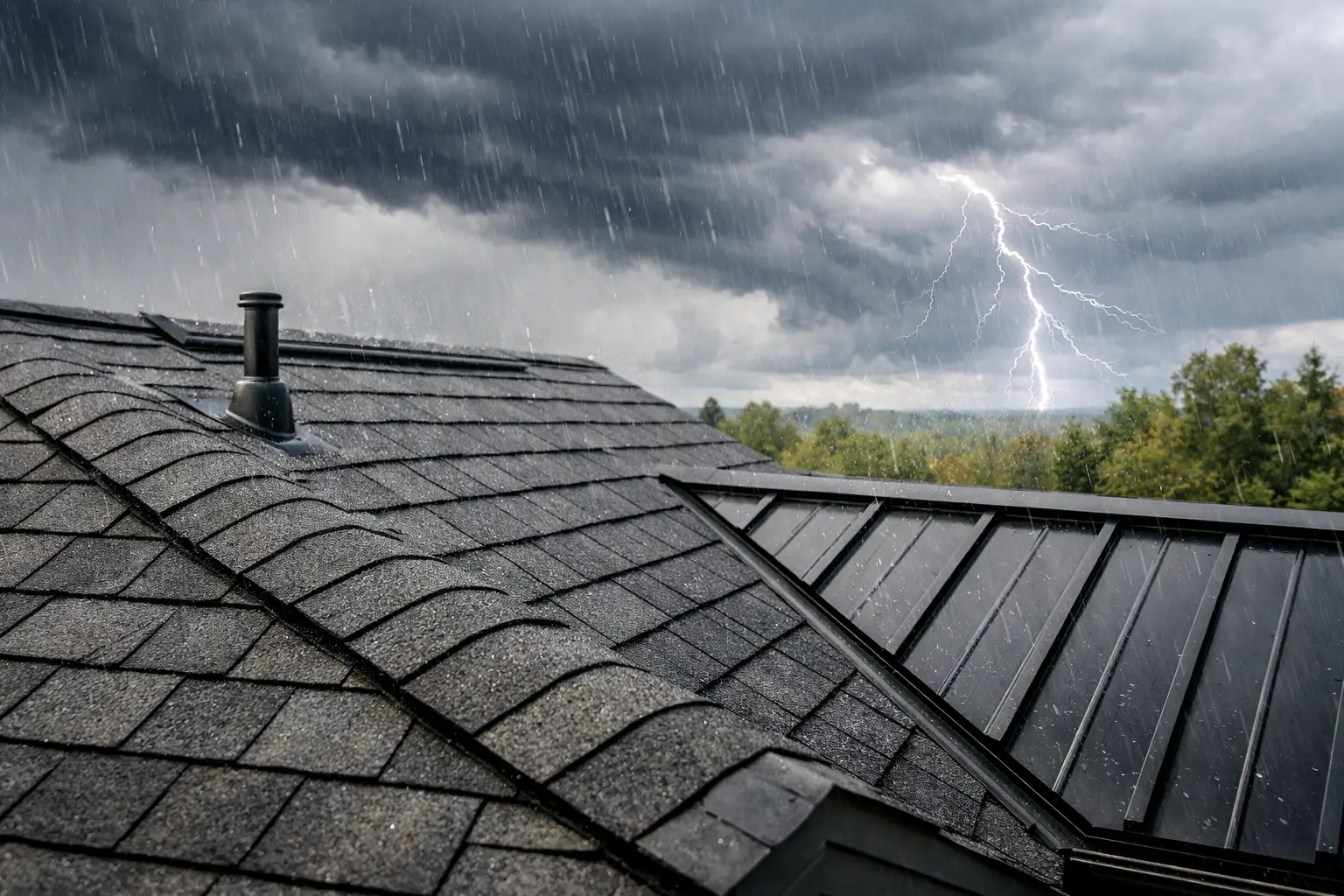
Water rarely announces a gutter problem before it becomes an expensive one. It shows up as mulch washed onto the walk, a damp line along the foundation, peeling trim, or ice building where it should not. A properly planned seamless aluminum gutter installation directs roof runoff away from the house before those small warning signs turn into siding, basement, or landscaping repairs.
For metro Detroit homeowners, the right system is not simply a long piece of metal attached to the roof edge. It is a measured drainage plan built around roof area, pitch, downspout locations, fascia condition, and Michigan's freeze-thaw weather. Here is what a well-scoped gutter replacement should include and what to look for before you approve the work.
What Seamless Aluminum Gutter Installation Actually Means
Unlike pre-cut gutter sections purchased in standard lengths, continuous aluminum gutters are formed on-site from a coil of painted aluminum. The installer measures each roofline and runs the material through a gutter-forming machine to create a custom-length section for that run.
This approach reduces the number of joints along the horizontal gutter. Fewer joints mean fewer locations that can separate, collect debris, or eventually leak. End caps and outlet connections are still required, so no system is completely free of seams. The practical advantage is that the long runs are custom-made for the home instead of pieced together from multiple short sections.
Aluminum is a common choice for residential gutters because it does not rust, is available in many colors, and is light enough to work well with properly prepared fascia. It is not indestructible. A ladder impact, falling branch, or heavy ice load can dent or pull a gutter out of alignment. Good material matters, but accurate installation and secure fastening matter just as much.
Start With Drainage, Not Just Gutter Color
Color should complement the roof, trim, and siding, but it is not the first design decision. The first question is how much water each roof section will send into the gutter during a hard rain.
A large, steep roof plane can shed a surprising amount of water in minutes. If the gutter is undersized or the downspout capacity is limited, water can pass over the front edge even when the gutter is clean. In many homes, 5-inch gutters are appropriate. Larger roof areas, long runs, or valleys that concentrate runoff may call for 6-inch gutters and larger downspouts.
The best size depends on the roof layout, not a one-size-fits-all recommendation. Valleys, dormers, second-story transitions, and areas where two roof planes meet often need extra attention because they deliver water quickly to a concentrated point. An itemized estimate should identify the gutter size, downspout size, total footage, and locations where drainage is being improved.
Downspouts do the real work of moving water away
Gutters collect water, but downspouts carry it safely to grade. A system can look clean from the street and still underperform if it has too few downspouts or if they are placed where water drains toward the foundation.
Downspouts should be positioned to move water away from entryways, driveways, and areas where it can refreeze. Extensions or underground drainage connections may be appropriate, depending on the property. The key is to plan the full path of water, from the roof edge to a discharge point that does not create a new problem near the home.
The Details That Separate a Reliable Installation
A gutter system is only as dependable as the condition of the surface holding it. Before new gutters go up, the installer should assess the fascia board and roof edge. Soft, rotted, or loose fascia cannot securely support a new system. Covering that condition with fresh aluminum may make the house look better briefly, but it does not solve the underlying issue.
The gutter must also be set at a controlled slope. It should be subtle enough to look level from the ground while allowing water to move toward the downspouts. Too little pitch can leave standing water and debris. Too much can look noticeably slanted and may place the gutter at the wrong height beneath the roof edge.
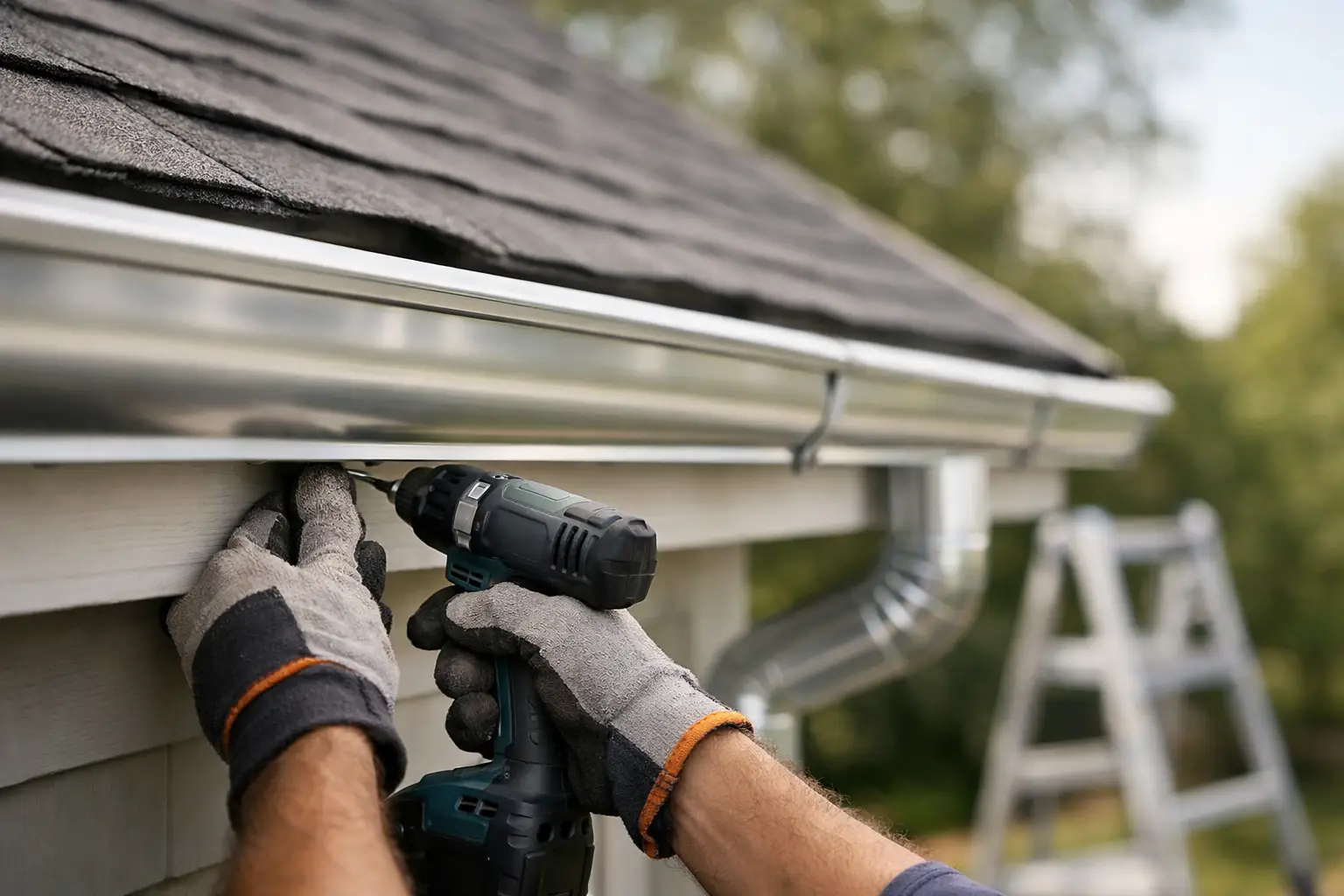
Fastening method matters as well. Modern hidden hangers with screws offer a cleaner appearance and strong support when installed at appropriate intervals into sound wood. They should be placed closely enough to handle snow, ice, and the weight of water during heavy storms. A written scope should clarify whether the project includes removing the old gutters, hauling debris, and correcting minor attachment issues found during removal.
A Clear Installation Process Means Fewer Surprises
Homeowners should not have to guess what happens between accepting an estimate and seeing new gutters on the house. A professional process usually begins with confirming measurements, roof drainage conditions, color selection, downspout locations, and the exact scope of removal and replacement.
On installation day, the crew removes old gutters and downspouts, inspects the attachment area, and forms the new aluminum runs on-site. After the gutters are hung, the crew installs outlets, end caps, downspouts, elbows, and discharge extensions as specified. The work area should be cleaned of old metal, fasteners, and job debris before the crew leaves.
Most straightforward gutter replacements can be completed efficiently, but timing depends on home size, access, weather, and whether fascia repairs are needed. Rain, ice, high winds, or unexpected wood damage can change the schedule or scope. That is not a reason for vague communication. It is a reason to document the condition, explain the options, and obtain approval before adding work or cost.
What Should Be Included in the Price
A low gutter quote can be difficult to compare if it only lists a total. Homeowners deserve enough detail to know what they are buying. At a minimum, the estimate should state the linear footage, material and gutter size, color, number and size of downspouts, removal of existing materials, disposal, and any planned extensions or accessories.
Ask whether the price includes the following if they apply to your home:
- Removal and disposal of existing gutters and downspouts
- Fascia repair or the process for approving repairs if damage is discovered
- Downspout extensions, splash control, or connection to existing drainage
- Gutter guards and any maintenance expectations that come with them
- Labor and material warranty terms in writing
Gutter guards can reduce the amount of leaf debris entering the system, but they are not maintenance-free. They also are not the right answer for every roof. Homes with heavy tree cover may benefit from them, while other properties may get better value from a simple, accessible system that is cleaned periodically. The roof's shingle condition, nearby trees, and the type of debris all affect that decision.
Michigan Weather Changes the Standard
Southeast Michigan gutters need to handle spring downpours, wind-driven rain, wet snow, and repeated freezing conditions. That does not mean a gutter system can prevent every ice issue by itself. Ice dams begin higher on the roof and are often connected to attic insulation, ventilation, and heat loss.
Still, gutters should be securely fastened, correctly pitched, and kept reasonably clear before winter. A clogged downspout can trap water that freezes and adds unnecessary weight. If a gutter repeatedly fills with ice or pulls away from the fascia, the right fix may involve more than replacing the gutter. A contractor should be willing to explain that distinction rather than selling a quick answer to a larger roof or ventilation problem.
Questions Worth Asking Before You Schedule
Before committing, ask how the crew determines gutter and downspout sizing, how existing fascia damage is handled, and what the final written warranty covers. Confirm that the contractor is licensed and insured, and that the estimate identifies the materials and work included.
It is also reasonable to ask how the crew protects landscaping, manages cleanup, and communicates if weather delays the project. These are not minor details. They are part of a controlled installation process and a useful signal of how the company will handle the job when conditions are less than perfect.
Guthix Roofing approaches gutter replacement with the same clarity homeowners expect from a major exterior project: documented scope, local licensed and insured crews, and no hidden costs. Whether your current gutters are leaking at joints, sagging under snow, or simply too small for the roof, the best next step is a measured plan that sends water where it belongs - away from your home.
Need this done on your Downriver home?
Guthix Roofing is based in Wyandotte and serves Downriver and Wayne County. See seamless gutter replacement from a licensed local roofer, or get an instant satellite-measured price — no name or phone needed to see the number.