A Michigan roof can look perfectly fine on a calm Tuesday and reveal its weak points after one hard windstorm, heavy wet snow, or freeze-thaw cycle. That is why choosing storm resistant roofing materials is about more than picking the heaviest or most expensive option. Your roof needs the right material, the right system components, and installation that leaves no shortcuts for wind or water to exploit.
For most metro Detroit homeowners, the best answer is not exotic. It is a properly installed architectural asphalt shingle roof system with the correct underlayment, flashing, ventilation, and fastening pattern. Other materials can make sense in specific situations, but storm performance always depends on the full assembly, not just what you see from the street.
What Michigan Weather Demands From a Roof
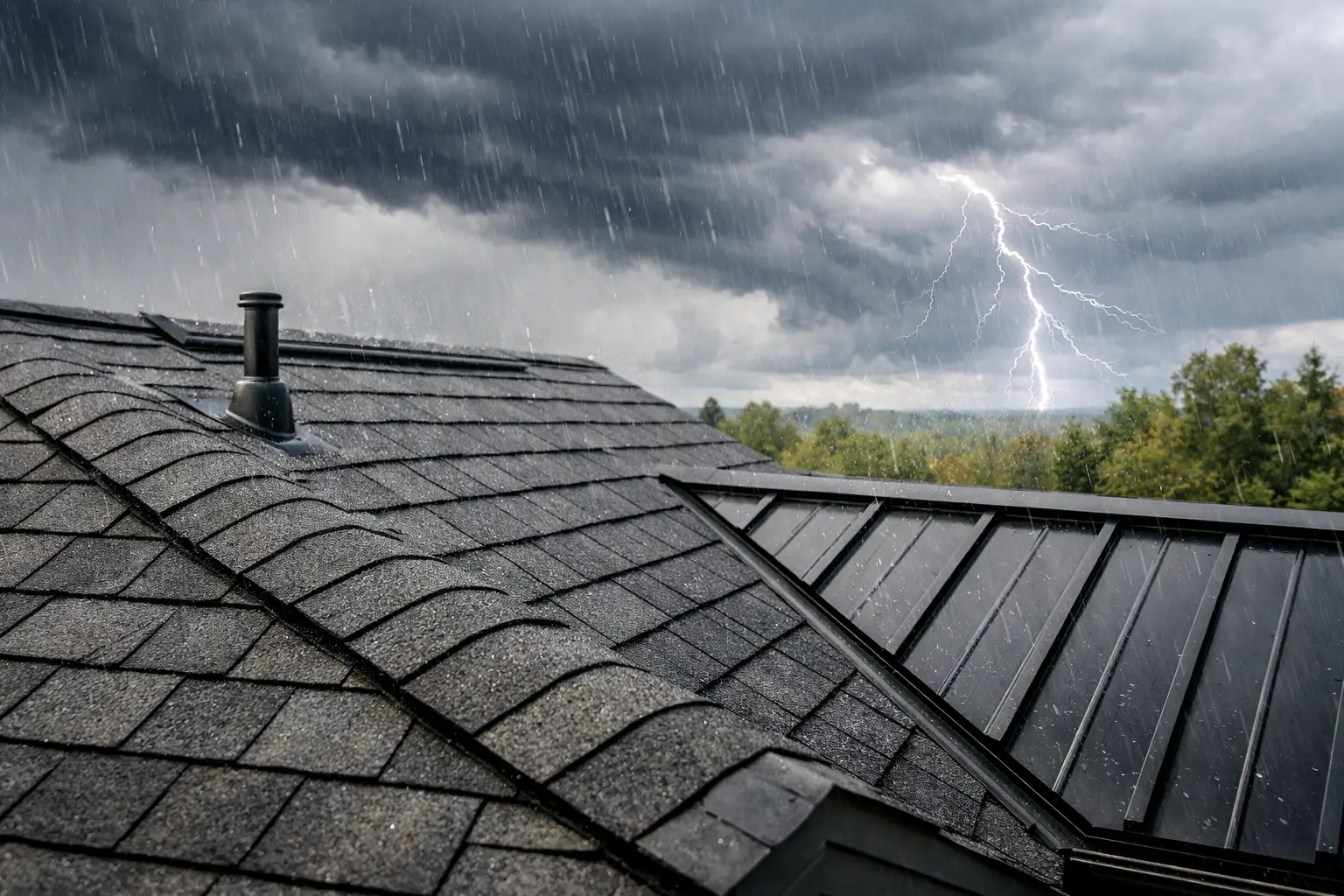
Southeast Michigan roofs face a different set of challenges than roofs in dry or consistently warm climates. Wind can lift shingles at ridges, edges, and around penetrations. Wind-driven rain can work beneath loose flashing. Ice dams can push meltwater back under the roof covering. Heavy snow adds weight, while repeated freezing and thawing tests every exposed seam.
A storm-ready roof should address four practical risks: wind uplift, water intrusion, impact from debris, and ice-related backup. Material matters, but the roof deck condition, nail placement, starter shingles, ridge caps, and metal flashing often determine whether a storm causes a minor cleanup or an interior leak.
This is also why a low bid can become expensive later. If an estimate does not clearly identify the materials and installation details, you cannot tell what protection is actually included. Ask for an itemized scope that explains the roofing system from deck preparation through final cleanup.
Storm Resistant Roofing Materials Compared
Architectural asphalt shingles
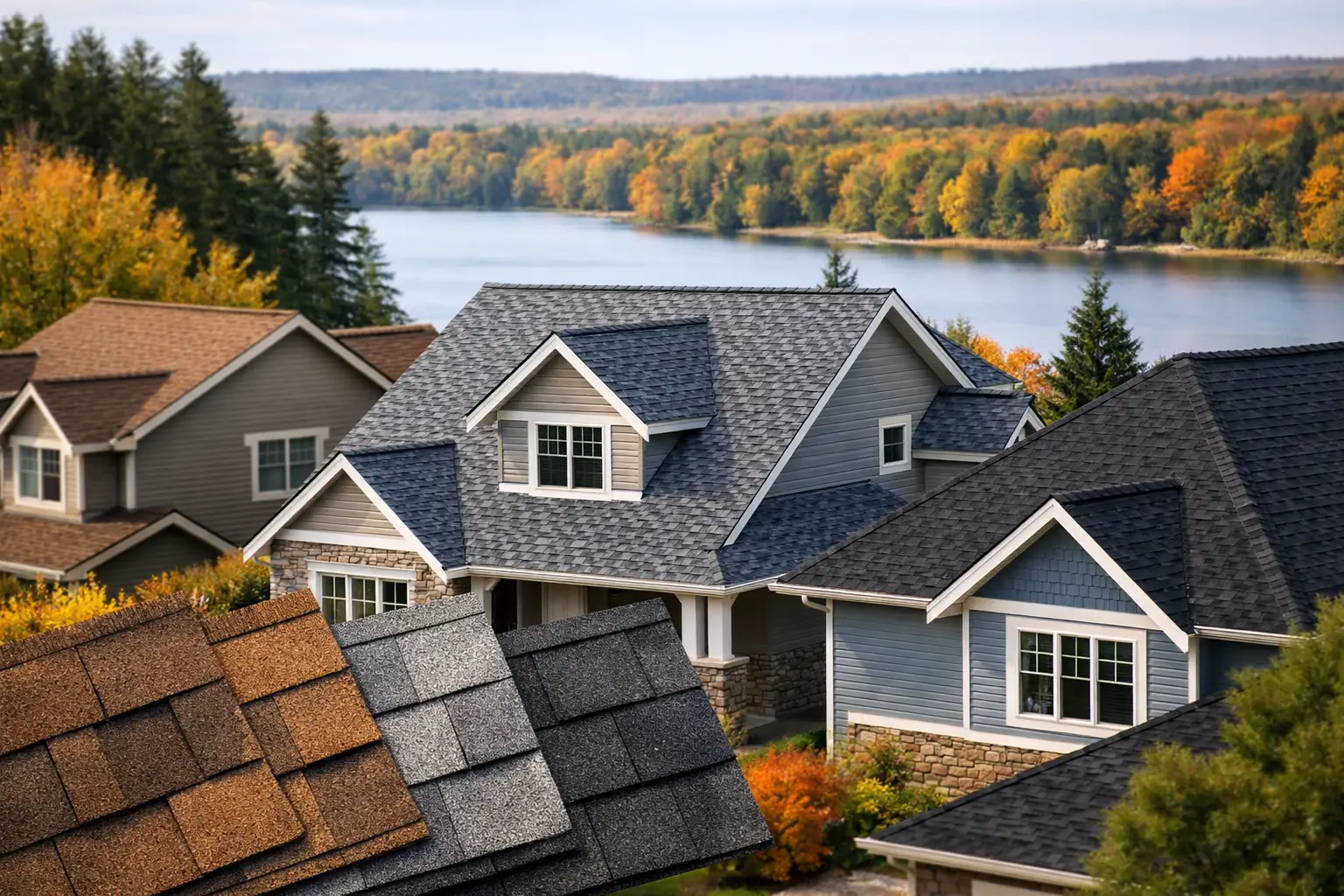
Architectural asphalt shingles are the practical choice for many Michigan homes. They offer a dimensional appearance, dependable wind performance when installed as a complete system, and a cost that remains manageable for a typical roof replacement.
Premium architectural shingles, including Owens Corning Duration® products, are designed with features intended to improve shingle bonding and wind resistance. Their performance still depends on using compatible starter shingles, hip and ridge shingles, underlayment, and proper fastening. A shingle’s published wind rating is not a promise that every roof will perform identically in every storm. It is tied to the manufacturer’s installation requirements and the roof system used.
Architectural shingles also handle the normal expansion and contraction of Michigan weather well. They are easier to repair than many specialty roof coverings and are available in colors that fit everything from brick colonials to newer suburban homes. For homeowners focused on value, appearance, and reliable weather protection, this is often the strongest overall option.
The trade-off is that asphalt shingles do not make up for poor workmanship. Missing starter courses, improper nailing, reused flashing, or inadequate attic ventilation can undermine a premium shingle roof quickly.
Metal roofing
Metal roofing can offer excellent wind resistance, long service life, and strong shedding of rain and snow. Standing-seam metal panels are especially effective when engineered and fastened correctly. Metal may be a good fit for homeowners planning to stay in their home for decades or for houses with a design that suits the look.
The cost is usually higher than architectural shingles, and installation is more specialized. Details around valleys, chimneys, skylights, and transitions require experienced crews. Metal can also be noisier during rain if the roof assembly is not designed properly, though the right decking and attic insulation reduce that concern.
A metal roof is not automatically better for every Michigan home. It needs properly designed snow retention where falling snow could create a hazard near entries, walkways, or lower roof sections. It also needs careful attention to ventilation and condensation control.
Synthetic composite roofing
Composite shingles and slate-style products are made to imitate natural materials while reducing weight and maintenance concerns. Some products offer strong impact ratings and can be a worthwhile option for homeowners who want a high-end appearance without installing natural slate.
The main considerations are budget, product availability, and installer familiarity. These systems can be expensive, and warranty coverage may depend on specific accessory products and approved installation methods. Before choosing composite roofing, ask how the material will be flashed, ventilated, and repaired if a future storm damages one area.
Natural slate and tile
Natural slate and tile can last for generations, but they are not a simple upgrade for every house. Both are heavy, and the existing structure may need evaluation before installation. Their individual pieces can also crack when struck by large branches or debris.
These materials are usually selected for architectural character and long-term value rather than the easiest storm solution. They require specialized installation and repair knowledge. If your home was not built for the additional load, an architectural shingle or composite system may provide better protection for a more practical investment.
The Installation Details That Matter as Much as the Material
A roof covering is only the visible layer of a water-management system. Storm resistance depends on how that system is assembled.
Deck preparation comes first. Before new materials are installed, damaged or soft roof decking should be identified and replaced. Fasteners cannot hold securely in compromised wood, and no shingle can correct a weak substrate.
Ice and water protection is especially relevant around eaves, valleys, and other vulnerable areas. This self-adhering membrane provides a secondary barrier where ice dams and wind-driven rain are most likely to force water beneath shingles. Local code requirements and the roof’s layout help determine where it belongs.
Starter shingles and edge details are critical in high winds. Shingles commonly fail first at the perimeter because the wind can catch an exposed edge. A correct starter course and properly installed drip edge help secure that area while directing water into the gutter rather than behind the fascia.
Nailing accuracy is not a minor detail. Nails placed too high, too low, angled, overdriven, or underdriven can reduce wind performance. The correct number and placement of fasteners should match the shingle manufacturer’s instructions and the roof’s conditions.
Flashing should be replaced, not treated as an afterthought. Chimneys, walls, plumbing vents, skylights, and valleys are common leak locations. New flashing, properly integrated with the roofing layers, protects these transitions far better than simply covering old problems with sealant.
Finally, attic ventilation helps manage heat and moisture. It will not stop a windstorm, but it can reduce conditions that shorten shingle life, contribute to uneven snow melt, and encourage ice dam formation. Intake and exhaust ventilation need to work together, not compete with each other.
How to Choose the Right Roof for Your Home
Start with your home, not a generic material ranking. Roof pitch, deck condition, attic ventilation, nearby trees, and budget all affect the right choice. A low-slope section may need different materials or details than the main roof. A home surrounded by mature trees may benefit from a material with strong impact performance, but trimming hazardous limbs is still part of the solution.
Then compare written estimates carefully. A useful estimate identifies the shingle or roofing product, underlayment, ice and water barrier, starter material, ridge caps, flashing approach, ventilation work, decking allowances, cleanup, and warranty terms. If these items are vague, the price may not reflect the same scope as another contractor’s proposal.
For a typical metro Detroit roof replacement, a premium architectural shingle system is often the sensible balance of storm protection, curb appeal, repairability, and cost. Guthix Roofing uses a documented scope and licensed, insured local crews so homeowners can see what is included before work begins. That clarity matters when you are making a decision meant to protect your home for years.
Questions Homeowners Should Ask Before Signing
Ask whether the contractor will inspect the roof deck during tear-off and how replacement decking is priced if needed. Confirm whether new flashing will be installed at chimneys, walls, and penetrations. Ask which roofing components are included to support the manufacturer warranty, and request those details in writing.
You should also ask how the crew protects landscaping, siding, and driveways during the project, as well as how magnetic nail cleanup is handled. Storm-resistant materials are a valuable investment, but a clean, code-compliant installation and a clear warranty are what make that investment easier to trust.
The right roof does not need to be the most expensive material on the market. It needs to be a complete, properly installed system that fits your home, your weather exposure, and your budget - with every important detail spelled out before the first shingle comes off.
Need this done on your Downriver home?
Guthix Roofing is based in Wyandotte and serves Downriver and Wayne County. See storm, wind & hail damage repair from a licensed local roofer, or get an instant satellite-measured price — no name or phone needed to see the number.